Mechanical (HVAC & Plumbing)
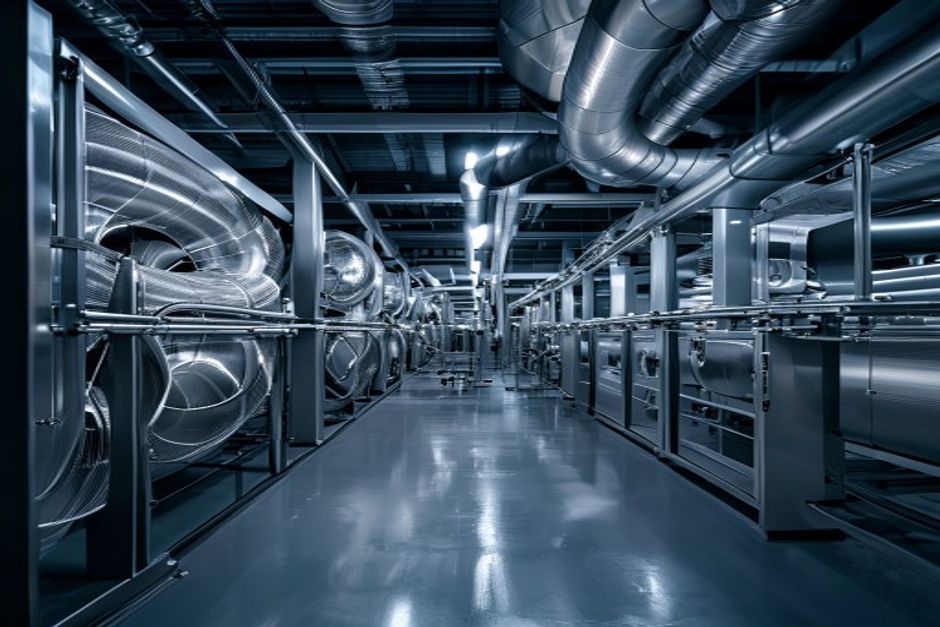
Complete HVAC system design — air handling, ductwork, refrigeration, and plumbing networks — sized for occupancy, climate, and energy code compliance.
Mechanical · Electrical · Plumbing · BIM
TechVisionEra's MEP engineering team designs mechanical, electrical, and plumbing systems that work — not just in isolation, but together, coordinated in real time within a shared BIM model. From HVAC load calculations and electrical distribution design to drainage layouts and fire protection, every system is sized, routed, and clash-verified before a single pipe is procured.
The Integration Imperative
Walk into any modern building and what you experience — the comfortable temperature, the reliable lighting, the clean water, the functional drainage — is the product of MEP engineering. Mechanical, electrical, and plumbing systems account for 30–50% of a building's total construction cost and nearly all of its operational running cost. Yet MEP is consistently the most poorly coordinated aspect of construction projects — because in the traditional model, each discipline is designed independently, then clashed at the last possible moment.
TechVisionEra's MEP approach is fundamentally different. Our mechanical engineers (HVAC, ventilation, plumbing), electrical engineers (LV, ELV, lighting, power), and plumbing specialists work within a single federated Revit model — shared simultaneously with the structural and architectural teams. Every duct run is routed with awareness of beams overhead and columns ahead. Every electrical tray is sized against the ceiling plenum space available. Every drainage stack is positioned where the structural slab will allow it. The result is an MEP package that actually fits the building it serves.
Our MEP designs meet international standards: ASHRAE (mechanical), IEC and BS 7671 (electrical), and CIBSE for building services. Energy performance is built into our process — HVAC systems are modelled for annual energy use using HAP, and lighting designs are validated using DIALux Evo against target lux levels and energy density limits. The buildings we design MEP for are not just functional — they are engineered to perform efficiently across their entire operational lifespan.
Whether you need mechanical-only HVAC design for an existing building, a complete MEP package for a new hospital, or an electrical single-line diagram for a commercial tower, TechVisionEra delivers with the same precision. Our team has MEP experience across residential, hospitality, healthcare, commercial, and industrial sectors — and the technical depth to handle the unique system requirements each sector demands.
Our MEP Services
Complete HVAC system design — air handling, ductwork, refrigeration, and plumbing networks — sized for occupancy, climate, and energy code compliance.
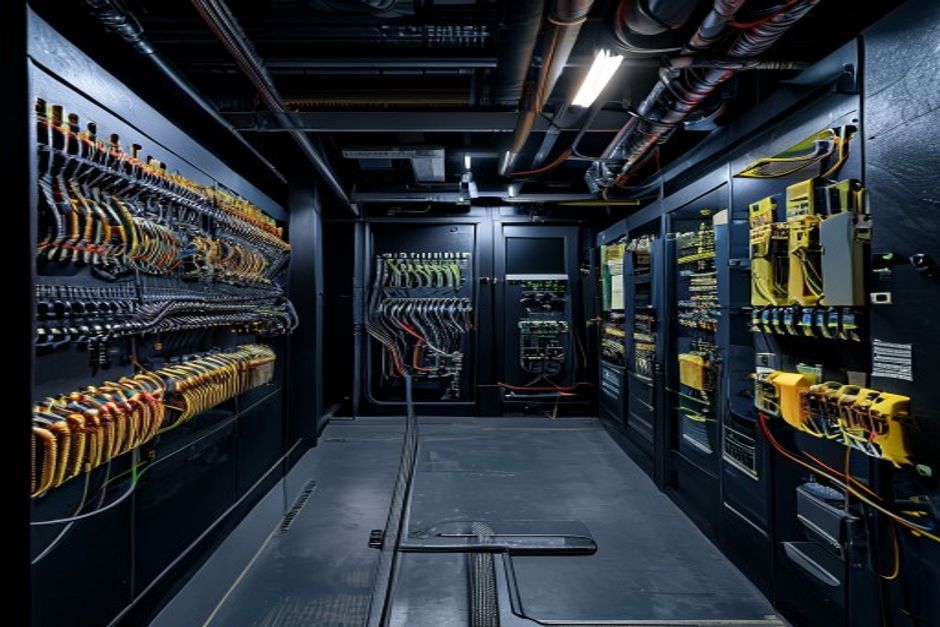
Full power distribution, lighting design, emergency systems, earthing, and low-voltage networks coordinated with architectural and structural layouts.
BMS, building automation, energy management, access control, and integrated IoT infrastructure designed to minimize operating costs and maximize comfort.
All MEP elements modelled in BIM with clash detection, accurate material take-offs, and complete shop drawing packages.
Industry Reach
Villas, apartments, and high-rise residential towers — from ducted split systems to central chilled water plants with heat recovery.
Open-plan offices with VAV air distribution, raised-floor power, structured cabling, and smart metering for tenant sub-billing.
Hospitals and clinics requiring positive/negative pressure rooms, medical gas networks, uninterrupted power supply, and infection-control ventilation.
Hotels and resorts with individualized room climate control, luxury plumbing packages, and integrated BMS for guest comfort and energy control.
Factory and warehouse MEP covering process cooling, heavy-power distribution, explosion-proof electrical, and industrial drainage systems.
Schools and universities with energy-efficient classroom conditioning, campus electrical distribution, and full low-voltage data networks.
Shopping centres and restaurants with centralized cooling plants, grease-laden exhaust systems, commercial kitchen MEP, and life-safety systems.
Multi-function complexes where MEP zoning, metering, and system interfaces must cleanly separate residential, retail, and commercial uses.
How We Work
We analyse your building's functional requirements, occupancy type, and climate zone to define the optimal MEP system strategy.
Our MEP team designs all systems within a shared BIM model, coordinating with structural and architectural teams to eliminate clashes.
Complete MEP drawings, equipment schedules, quantity surveys, and commissioning guidance for correct installation.
Compliance & Codes
Our MEP designs are benchmarked against the leading international performance standards, ensuring your building meets energy regulations, electrical safety codes, and mechanical best-practice requirements recognized across global markets.
ASHRAE 90.1
Energy Standard for Buildings
The benchmark for energy-efficient HVAC and lighting design — the foundation of LEED energy credit compliance.
ASHRAE 62.1
Ventilation for Indoor Air Quality
Governs minimum outdoor air rates for all occupied spaces — critical for health, comfort, and regulatory approval.
IEC 60364
Electrical Installations
The international standard for low-voltage electrical installation design, wiring, and testing — adopted in 60+ countries.
BS 7671
IET Wiring Regulations
UK standard for electrical installations — required for Gulf-region and UK projects following British specification systems.
NFPA 101
Life Safety Code
Governs emergency lighting, exit signage, and fire alarm systems — essential for occupancy permits in US-standard projects.
ISO 50001
Energy Management Systems
Framework for continual energy performance improvement — aligned with our smart BMS and monitoring designs.
Smart Technology
Carrier HAP
Hourly energy simulation & equipment sizing for HVAC systems — precise for every climate zone
IES-VE
Dynamic thermal modelling for energy performance, daylighting, and LEED compliance
Revit MEP
3D MEP modelling — duct routing, pipe networks, electrical conduit, and clash coordination
DIALux Evo
Photometric calculation and lux-level verification for all interior and exterior lighting designs
BMS / SCADA
Building management systems for HVAC, lighting, and energy control — designed for remote operation
Smart Sensors
CO₂, occupancy, humidity, and temperature sensors integrated into automated control logic
Navisworks
Federated model clash detection — every MEP element verified against structural and architectural models
AutoCAD MEP
Pipe sizing, drainage gradients, and plumbing schematic production for all building types
MEP covers Mechanical (HVAC, ventilation, plumbing, fire protection), Electrical (power distribution, lighting, LV and ELV systems), and Plumbing (drainage, water supply, sanitation). TechVisionEra delivers all three coordinated in a single BIM model.
Yes — this is our core working method. MEP, structural, and architectural teams share one federated Revit model. Every duct, pipe, and cable tray is routed with awareness of structural elements and ceiling voids, eliminating clashes before construction.
We design to ASHRAE (mechanical), IEC and BS 7671 (electrical), CIBSE (building services), and NFPA (fire protection). Gulf and regional code variants are accommodated on request.
MEP design for a residential project typically takes 7–14 working days. Full MEP for a commercial building takes 3–8 weeks depending on complexity. A clear timeline is provided with every quotation.
A complete MEP package includes HVAC equipment schedules and duct layouts, electrical single-line diagrams and load schedules, plumbing riser diagrams and drainage plans, BIM model (.rvt and IFC), clash detection report, and AutoCAD DWG drawings for contractor use.
Yes. TechVisionEra uses HAP (Hourly Analysis Program) to model HVAC systems for hot-arid (Gulf), humid-tropical, and continental climates. Cooling and heating loads are calculated to ASHRAE 55 and ASHRAE 62.1 standards for occupant comfort and energy efficiency.
Yes. Energy performance analysis using HAP and energy simulation tools is available as part of our MEP service. We produce energy compliance reports and can optimize system selection to meet local green building rating requirements.
Yes. TechVisionEra uses DIALux Evo to model interior and exterior lighting for target lux levels, uniformity ratios, and energy density limits. Photometric reports are included with the electrical design package.
Absolutely. We can work from existing architectural and structural drawings to produce coordinated MEP design. Upload your existing drawings and we will assess coordination requirements as part of the scoping process.
Share your project type, floor count, building use, and any existing architectural or structural drawings via WhatsApp at +60 10-247 3580 or email info@techvisionera.com. We will respond with a scope confirmation and quotation within 24 hours.
Complete Your Project
Get integrated MEP engineering with full BIM coordination from day one.