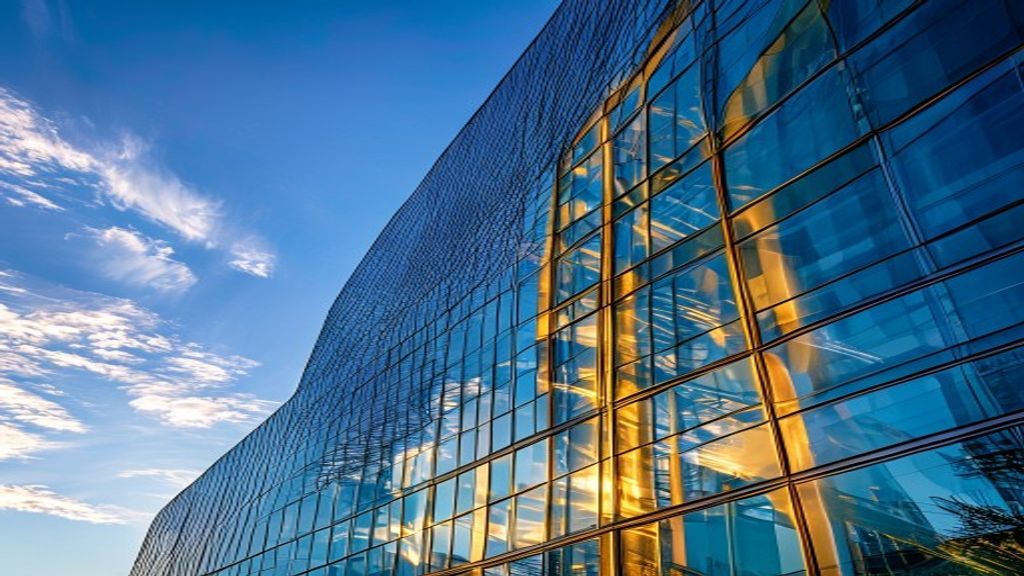
A building's facade is far more than a visual statement — it is the primary interface between interior comfort and the external environment. Facade design determines how a structure manages solar heat gain, wind loading, moisture ingress, acoustic performance, and fire safety while projecting an architectural identity that defines the project's market value. Whether the brief calls for a fully glazed commercial tower, a textured composite cladding system, or a hybrid envelope combining multiple material families, the engineering decisions made at facade level ripple through every structural, mechanical, and sustainability discipline on the project.
For commercial and institutional projects, the facade typically represents 15–25% of the total construction cost — a budget share that demands rigorous material selection, precise performance specification, and coordinated documentation. This article outlines the principal facade system types, key material properties, sustainability drivers, and the engineering frameworks that underpin every high-performing building envelope, with reference to the international standards and BIM workflows that TechVisionEra's architectural design team applies on projects worldwide.
Glass Curtain Wall Systems: Technology, Types, and Thermal Performance
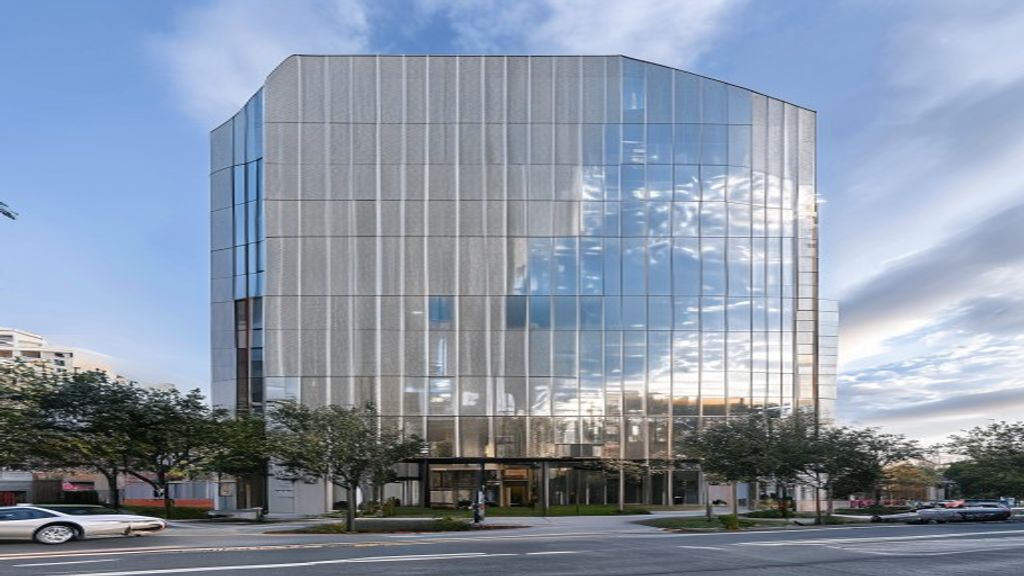
Glass curtain wall systems are non-load-bearing exterior walls that span floor-to-floor — or across multiple storeys — and carry only their own self-weight back to the primary structure. Two principal construction methods dominate the market: the stick-built system, where individual aluminium mullions and transoms are assembled on site and glazing units inserted sequentially, and the unitised system, where factory-assembled panels are craned directly into position and interlocked on a floor-by-floor basis. Unitised systems deliver superior quality control and significantly faster installation, and are the industry standard for buildings above 15 storeys or where site access constrains traditional scaffolding approaches. Both systems are engineered to accommodate the building's structural movement — including thermal expansion, storey drift, and live load deflection — through slotted fixings and pressure-equalised drainage cavities.
Beyond the single-skin baseline, advanced programmes increasingly specify double-skin facade (DSF) systems. A DSF interposes a second glazed layer 200–1,200 mm outboard of the primary skin, creating a tempered buffer cavity that dramatically reduces solar heat gain in hot climates while recovering useful heat in colder ones. The cavity can house motorised solar shading blinds, acoustic attenuators, maintenance walkways, or even planted vertical gardens. Structural glazing — where glass units are bonded to the aluminium frame with structural silicone rather than retained by pressure caps — eliminates all visible external fixings and achieves the seamlessly flush aesthetic demanded by premium architectural briefs. For curved facades and complex geometry, point-fixed structural glazing with spider fittings allows glass to span between minimal steelwork without any aluminium extrusions in the external plane.
Thermal performance is quantified through two critical metrics: the U-value (overall heat transfer coefficient, measured in W/m²K) and the solar factor g-value (proportion of incident solar energy transmitted into the building). Best-in-class systems achieve U-values of 0.8–1.2 W/m²K using triple-glazed units with warm-edge spacer bars and argon or krypton cavity fill, paired with g-values as low as 0.25 through spectrally selective low-emissivity (low-e) coatings. These values must be simulated against site-specific climate data within energy models compliant with EN ISO 52016, ASHRAE 90.1, or the applicable local energy code. The MEP engineering team must receive confirmed facade U-values and g-values before sizing HVAC plant — facade and MEP coordination is a non-negotiable sequential dependency in any well-managed project programme.
Composite Panel Facades: ACM, GRC, Terracotta, and HPL Cladding
Aluminium Composite Material (ACM) panels — marketed globally under trade names such as Alucobond, Reynobond, and Alpolic — consist of two thin aluminium skins bonded to a polyethylene or fire-retardant mineral-filled core. They are lightweight (typically 4–6 kg/m² for a 4 mm panel), available in an unlimited colour and finish palette including PVDF-coated, anodised, brushed, and mirror finishes, and can be routered and folded into complex cassette profiles without specialist fabrication. ACM panels are the workhouse material for retail fit-outs, hotel refurbishments, low-to-mid-rise commercial facades, and interior cladding wherever a premium appearance at controlled cost is the primary driver. Following the Grenfell Tower fire, fire-retardant (FR) or non-combustible mineral-core variants are now mandatory on buildings over 18 m in the UK and are increasingly required by project specifications globally — engineers must verify classification against EN 13501-1 for every proposed assembly.
Glass Reinforced Concrete (GRC) panels offer a fundamentally different value proposition: the monumental solidity and surface texture of concrete at a fraction of the dead load. GRC is manufactured by spraying a mixture of Portland cement, fine aggregate, alkali-resistant glass fibre, and admixtures onto precision moulds, producing panels as thin as 10–12 mm that can faithfully replicate stone, ribbed concrete, or bold three-dimensional sculptural profiles. Panel weights of 40–80 kg/m² require careful coordination with the structural engineering team for anchorage design, floor load verification, and differential movement detailing. GRC is the material of choice for institutional and civic projects — museums, university buildings, government headquarters — where architectural expression demands heavy masonry character without the dead load penalty of solid precast. Terracotta rainscreen panels share many of GRC's durability credentials while offering a range of natural clay colours and textured or smooth surfaces; product lifespans exceeding 60 years make terracotta a compelling long-term sustainability choice for civic buildings.
High-Pressure Laminate (HPL) panels and fibre-cement boards complete the mainstream composite cladding palette for lower-budget or residential-scale projects. Selecting the right material for a given project requires systematic evaluation across multiple criteria:
- Fire classification — verify A1, A2-s1,d0, or B-s1,d0 under EN 13501-1 as required by building height and local jurisdiction
- Wind load resistance — calculate design pressure (kN/m²) to EN 1991-1-4 (Eurocode 1) before confirming panel thickness and fixing centres
- Thermal performance — pair rainscreen panels with continuous mineral wool or PIR insulation to achieve target U-values, avoiding thermal bridging at metal fixings
- Durability in local climate — PVDF-coated aluminium for coastal and high-UV environments; sealed joint profiles for high-humidity or desert dust climates
- Embodied carbon — compare Environmental Product Declarations (EPDs) across shortlisted materials; specify recycled-content aluminium where feasible
- Lead time and local supply chain — unitised systems and bespoke GRC panels require 12–24 weeks procurement; verify programme before specification is finalised
Sustainability, Energy Performance, and Green Building Certification
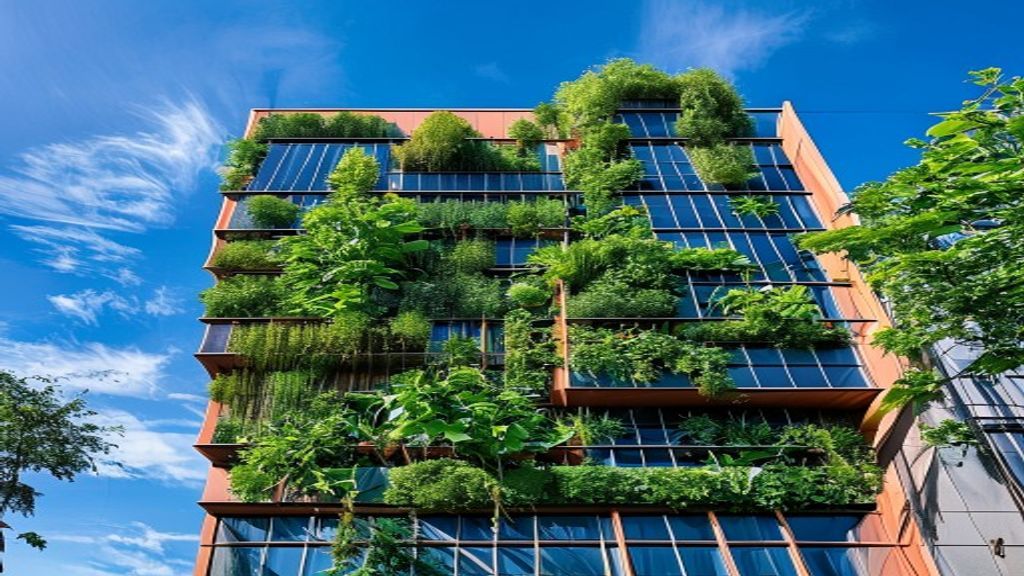
The facade is the single highest-leverage intervention for reducing a building's operational energy consumption. Roughly 30% of all heating and cooling energy in commercial buildings crosses the building envelope, making facade engineering central to achieving LEED v4, BREEAM Excellent, Estidama Pearl, and GSAS certification targets. Facade engineers must collaborate with energy consultants to simulate annual energy balance using tools such as IES-VE, EnergyPlus, or DesignBuilder, iterating on window-to-wall ratio, external shading geometry, and insulation depth to optimise the building's Energy Use Intensity (EUI). Fixed shading devices — horizontal brise-soleil blades, vertical fins, and perforated metal screens — can reduce solar heat gain by 40–60% on south and west elevations without compromising daylight quality, and are significantly more reliable than motorised systems over a building's lifetime.
Beyond operational energy, embodied carbon is rising rapidly up the sustainability agenda as built-environment clients adopt net-zero whole-life carbon targets. Aluminium is highly energy-intensive to produce from bauxite, but also infinitely recyclable: secondary aluminium requires only 5% of the energy needed for primary production, making recycled-content specification a straightforward embodied carbon reduction measure. All material selections for certified projects should be supported by verified EPDs under ISO 14025 and EN 15804. The interior decoration team can extend sustainability principles seamlessly from the external envelope into interior material specifications, ensuring LEED Material and Resources credits are pursued holistically across the project boundary.
"The facade is not merely a skin — it is a climate-control membrane, a structural boundary, and an architectural statement fused into a single engineered assembly that defines a building's performance for fifty years."
BIM-Driven Facade Coordination and Clash Detection
Building Information Modelling (BIM) has transformed facade engineering from a discipline of two-dimensional shop drawings into a fully coordinated, data-rich three-dimensional workflow. TechVisionEra develops facade models in Autodesk Revit to Level of Development (LOD) 350 or LOD 400 as required by the employer's information requirements, embedding unit dimensions, material specifications, fire-stop positions, drainage paths, anchorage coordinates, and manufacturer product data directly into each model element. These models are federated with structural, MEP, and fit-out models in Autodesk Navisworks for systematic clash detection — identifying conflicts between facade brackets and structural beams, curtain wall drainage and MEP penetrations, or panel edges and slab recesses — before any component reaches fabrication or the site.
BIM also enables accurate quantity extraction directly from the model for BoQ preparation, 4D construction sequencing for crane and installation planning, and the generation of fabrication-ready drawings that panel manufacturers can use directly for CNC routing and folding of aluminium cassettes or unitised frame extrusions. For projects with complex geometry — parametric facades with double curvature, faceted prismatic cladding, or curved glazed atria — Grasshopper and Rhino scripts rationalise panel geometry to minimise the number of unique panel types, dramatically reducing fabrication cost without sacrificing the architect's formal intent. This BIM coordination process links directly into TechVisionEra's onsite supervision and inspection service, where our site engineers verify installed facade components against the federated BIM model at each construction stage.
Lock your glazing ratio and fixed shading geometry before MEP sizing begins. A 10% increase in window-to-wall ratio added late in Stage 3 can force a complete HVAC plant resizing, adding weeks to the programme and significant cost to the mechanical package. Issue confirmed facade U-values and g-values to the energy consultant at the end of Concept Design stage — not after Detail Design is underway.
International Standards and Fire Safety Compliance for Facade Systems
Facade systems operate under a layered set of structural, thermal, fire, acoustic, and watertightness standards that vary by jurisdiction and building type. TechVisionEra designs to the European standards framework by default — Eurocode EN 1991-1-4 for wind loading, EN 1990 for structural reliability, EN 14351-1 for window and external door performance, and EN ISO 10077 for thermal transmittance calculation — while adapting to local National Annexes, ASTM standards for North American projects, SASO standards for Saudi Arabia, or GB 50009 for China-based work. International clients should confirm which code framework their local Authority Having Jurisdiction (AHJ) requires at briefing stage, as this directly affects wind pressure calculations, deflection limits, and the basis of fire classification testing.
Fire safety compliance is the most consequential regulatory domain in contemporary facade engineering. Following a series of high-profile cladding fires globally, regulators have substantially tightened requirements on combustibility classification and the installation of cavity fire barriers at every floor level. The UK Building Safety Act 2022 mandates A1 or A2-s1,d0 classification under EN 13501-1 for facade materials on all buildings above 18 m. Equivalent requirements are being adopted across the GCC, Singapore, Australia, and parts of the EU. In the United States, NFPA 285 multi-storey fire testing is the standard acceptance criterion for combustible cladding assemblies — test evidence must cover the specific assembly including insulation, air barrier, and panel, not merely the core material in isolation. For projects in seismically active regions — including Turkey, Iran, and the broader MENA corridor — facade anchorage must be designed to accommodate inter-storey drift without glass fracture or panel detachment, addressed under Eurocode 8 (EN 1998-1) and ASCE 7.
TechVisionEra's Global Facade Design Service
TechVisionEra Engineering delivers complete facade design packages for commercial, hospitality, residential, and civic projects across the Middle East, North Africa, Europe, and Southeast Asia. Our team operates entirely remotely, collaborating with lead consultants, facade contractors, and clients through shared BIM environments, cloud-based model review platforms, and structured communication protocols that eliminate the delays of traditional document-by-post exchanges. Whether the project is a unitised glass tower in Riyadh, an ACM composite campus in Kuala Lumpur, a GRC civic building in Amman, or a terracotta rainscreen refurbishment in Frankfurt, our facade engineers engage from concept through to construction administration.
Our facade design service integrates directly with TechVisionEra's structural engineering, MEP engineering, architectural design, and interior decoration capabilities — enabling genuinely coordinated single-source design delivery. A complete facade package from our team typically includes:
- Facade concept design report with material shortlist, performance comparison, and cost-per-m² benchmark
- Detailed facade drawings: plans, elevations, large-scale sections, and setting-out coordinate schedules
- Full system details: sill, head, jamb, corner, expansion joint, parapet, drainage, and cavity fire-barrier details
- BIM model to LOD 350 or LOD 400 as specified in the employer's information requirements
- Performance specification for contractor procurement (U-value, g-value, acoustic Rw, fire classification, water-tightness)
- Wind loading calculations to applicable Eurocode or local standard with structural anchorage sizing
- Clash detection report from federated BIM coordination with structural and MEP models
- BoQ extraction from BIM model for quantity surveying and tender pricing
- Shop drawing review and technical comment schedule during construction phase
- RFI response and design-change management throughout the construction administration period
For enquiries about facade design scope and fees, contact TechVisionEra Engineering with your project brief, location, and programme timeline.
Key Takeaway
High-performing facades require the integration of material science, structural engineering, energy modelling, fire safety compliance, and BIM coordination into a single coherent design process. Whether specifying unitised glass curtain walls for maximum transparency, composite ACM panels for design flexibility and cost efficiency, or sustainable hybrid assemblies targeting LEED or BREEAM certification, the engineering decisions made at facade level define a building's energy performance, regulatory compliance, and architectural legacy for decades. TechVisionEra Engineering brings international standards expertise, BIM-driven delivery, and cross-discipline coordination to facade projects worldwide — get in touch to discuss your facade brief.
Frequently Asked Questions
A glass curtain wall is a non-load-bearing external wall system that spans from floor plate to floor plate (or across multiple storeys) and transfers only its own dead weight and wind loading to the primary structure. It differs from a conventional window wall, which sits within the slab-to-slab zone and is supported at the floor edges. Curtain walls offer a continuous, flush external appearance with no structural slab edge expressed on the facade, making them the preferred choice for commercial towers and high-specification buildings. They consist of an aluminium framing system (mullions and transoms) and double- or triple-glazed insulating units, with pressure-equalised drainage cavities and thermal breaks throughout to manage condensation and energy performance.
Stick-built (also called stick systems) are assembled component by component on site: vertical mullions are fixed to the structure first, horizontal transoms are inserted next, and glass units are glazed into the completed frame. They are flexible, cost-effective for lower-rise or irregular geometry, and require no heavy cranage. Unitised systems are factory-assembled as complete floor-height panels incorporating glazing, framing, thermal insulation, and drainage, and are craned directly into position on site. Unitised systems offer superior quality control, much faster installation (critical for tall buildings where floor-by-floor programmes are tight), and are the industry standard above 15 storeys. The trade-off is higher fabrication cost and longer factory lead times of 12–20 weeks.
The facade accounts for approximately 30% of total building energy loss or gain through conduction, convection, and solar radiation. The key performance parameters are the U-value (heat transmission rate through the assembly, W/m²K — lower is better) and the solar factor g-value (proportion of solar energy entering the building — lower values are preferred in hot climates). High-performance glazing with triple-glazed units, low-e coatings, and warm-edge spacers can achieve U-values below 1.0 W/m²K and g-values as low as 0.25, significantly reducing cooling or heating loads. Fixed shading devices such as horizontal brise-soleil blades reduce solar heat gain on exposed orientations by 40–60%. All these values must be confirmed through dynamic energy simulation before the HVAC system is sized.
ACM panels (trade names include Alucobond, Reynobond, and Alpolic) consist of two thin aluminium skins bonded to a core — either polyethylene (PE) or a fire-retardant mineral-filled compound. They are available in thicknesses of 3–6 mm, weigh only 4–7 kg/m², and can be finished in any colour using PVDF coating, anodising, or mirror polishing. They are widely used for commercial and retail facade cladding, signage fascias, interior cladding, column casing, and spandrel panels. Following fire safety regulations post-Grenfell, buildings above 18 m in the UK and increasingly worldwide must use fire-retardant (FR) or non-combustible mineral-core ACM classified at minimum A2-s1,d0 under EN 13501-1.
A double-skin facade comprises a primary glazed skin and a secondary outer skin separated by a buffer cavity of 200 mm to 1,200 mm width. The cavity moderates heat gain in summer and heat loss in winter, houses motorised solar shading blinds (protected from wind), and can provide maintenance access and acoustic attenuation. DSFs are cost-justified on high-specification commercial buildings in climates with extreme summer solar radiation (such as the Gulf states), on noise-sensitive sites adjacent to roads or airports, and on LEED/BREEAM projects where the energy savings translate directly into certification credits. The additional capital cost is typically 20–40% above a conventional single-skin curtain wall, but lifecycle energy savings and occupant comfort improvements often justify the investment for long-life commercial assets.
Glass curtain wall costs vary significantly by system type, glazing specification, and market. As a broad benchmark: basic stick-built aluminium curtain wall with standard double-glazed units typically costs USD 250–400/m² supply and install in Middle Eastern and Southeast Asian markets. Unitised systems with high-performance triple glazing run USD 400–700/m². Double-skin facades or structural glazing systems with bespoke profiles can reach USD 800–1,500/m² or above. These figures cover the facade system only and exclude structural modifications for facade loads, interior finishes, or MEP penetrations. Project-specific quotes from curtain wall contractors should always be sought after the performance specification and tender documentation are complete.
Several green building rating systems directly reward high-performance facade design. LEED v4 awards credits under Energy and Atmosphere (Optimize Energy Performance) for achieving low EUI through facade improvements, and under Materials and Resources for EPD-verified, low-embodied-carbon, and recycled-content cladding materials. BREEAM awards credits under Energy (Ene 01) and Materials (Mat 01–03) categories. Estidama Pearl in the UAE and GSAS in Qatar have analogous credits for envelope performance and material sustainability. Projects targeting Passive House certification must meet strict U-value and thermal bridge thresholds across the entire facade assembly. TechVisionEra can produce the facade performance documentation required for credit submissions under any of these systems.
The principal European standards are: EN 1991-1-4 (Eurocode 1, wind loading), EN 14351-1 (windows and external doors performance), EN ISO 10077 (thermal transmittance of windows), EN 13501-1 (fire classification of construction products), and EN 12758 (glazing acoustic performance). In North America, ASTM E283, E330, and E331 govern air infiltration, structural performance, and water penetration of curtain walls respectively, and NFPA 285 governs fire testing of combustible cladding assemblies. In the Gulf, local standards such as SASO and Dubai Building Code incorporate or reference Eurocode and ASTM frameworks with local climate amendments. TechVisionEra designs to the applicable framework for each project jurisdiction and can adapt documentation to any regional code requirement.
BIM enables facade engineers to build a 3D information model to LOD 350–400 that embeds all technical data — unit dimensions, material specifications, fire-stop locations, drainage paths, fixing coordinates, and manufacturer product data — directly into each model element. This model is federated with structural and MEP models for systematic clash detection, identifying conflicts between facade brackets and structural steel, curtain wall drainage and duct penetrations, or panel edges and slab setbacks, before any component is fabricated. BIM also allows accurate quantity extraction for BoQ preparation, 4D installation sequencing, and generation of fabrication-ready drawings for CNC manufacture. For complex geometry, parametric BIM scripting in Grasshopper rationalises unique panel counts to control fabrication cost.
Fire safety for external cladding is governed by the building height, occupancy type, and local regulation. The key classification standard in Europe and internationally is EN 13501-1, which classifies materials from A1 (non-combustible) through F (no performance determined). In the UK under the Building Safety Act 2022, buildings above 18 m must use A1 or A2-s1,d0 cladding materials. Cavity fire barriers must be installed at every floor level and around opening perimeters within rainscreen cavities. In the USA, NFPA 285 governs testing of combustible facade assemblies. For GCC countries, the International Building Code (IBC) and local civil defence authority requirements apply. All fire test evidence must cover the full as-built assembly — insulation, air barrier, fixings, and panel — not individual components in isolation.
Timelines depend on project complexity, the required LOD, and the number of facade system types. For a straightforward mid-rise commercial building with a single curtain wall system, a complete concept-through-detail design package (including performance specification, BIM model to LOD 350, and detailed drawings) typically requires 8–14 weeks. Complex projects with multiple facade zones, bespoke geometry, or parametric cladding rationalisation may require 16–24 weeks for the design documentation phase. Construction phase shop drawing review and RFI response are ongoing through the installation period, typically 6–18 months. TechVisionEra provides a programme at the start of engagement aligned to the project's overall design and procurement timeline.
Yes. TechVisionEra delivers all facade design services remotely to international clients. Our engineers collaborate through shared cloud-based BIM environments (BIM 360 / ACC), PDF and DWG drawing issue registers, video conferencing for design workshops, and structured RFI and comment-response workflows. We have delivered facade documentation for projects in Saudi Arabia, the UAE, Qatar, Jordan, Turkey, Malaysia, and Europe entirely remotely, coordinating with local architects, structural engineers, and facade contractors. Where physical site inspection is required for construction phase supervision, we coordinate with trusted local site engineers or can arrange mobilisation if the project scope warrants it.
A complete TechVisionEra facade design package includes: facade concept design report with material options and performance benchmarks; detailed drawings (plans, elevations, large-scale sections, setting-out schedules); full system details (sill, head, jamb, corner, parapet, expansion joint, drainage, cavity fire barrier); BIM model to LOD 350 or LOD 400; performance specification for contractor procurement; wind loading calculations to Eurocode or local standard; clash detection report from BIM coordination; BoQ quantity extraction; shop drawing review and technical comment schedules during construction; and RFI response management throughout the construction administration period. The scope is tailored to each project at engagement stage.
Facades for hot arid and hot humid climates (UAE, Saudi Arabia, Qatar, Malaysia) are optimised for three primary performance goals: minimising solar heat gain, preventing condensation within the assembly, and resisting high wind pressures during seasonal storms. Key strategies include: specifying low g-value solar control glazing (g ≤ 0.30) with spectrally selective coatings; incorporating external fixed shading devices on south and west elevations; using ventilated rainscreen cavity assemblies to manage hygrothermal conditions; applying reflective or white cool-roof and cool-facade finishes to reduce urban heat island contribution; and sizing all drainage channels for intense localised rainfall events. Energy simulations are run against ASHRAE Climate Zone 1 or equivalent local climate files to ensure facade performance aligns with the building's EUI targets and local energy code requirements.
GRC (Glass Reinforced Concrete) panels are made from a cement and alkali-resistant glass fibre matrix, giving them the appearance and texture of solid concrete at a panel thickness of 10–15 mm and weights of 40–80 kg/m². They are ideal for monumental or civic architecture requiring heavy masonry character, complex three-dimensional profiles, or replication of stone and textured concrete. ACM (Aluminium Composite Material) panels are aluminium-faced with a polymer or mineral core, weighing only 4–7 kg/m², and are ideal for contemporary commercial facades where clean flat geometry, colour variety, and lightweight construction are priorities. GRC is more expensive to fabricate, requires longer lead times, and imposes greater structural loads, but offers unmatched sculptural range. ACM is faster, lighter, and more cost-effective for flat or simple folded geometry.
Facade design sits at the intersection of architecture, structure, and building services and requires coordinated input from all three disciplines. Structurally, the facade engineer must confirm point loads and distributed facade dead loads to the structural engineer for floor slab and column design; in turn, the structural engineer must provide confirmed slab deflection limits and inter-storey drift values so the facade engineer can design appropriate movement joints and slotted fixings. For MEP coordination, confirmed facade U-values and g-values are required before HVAC plant sizing; fresh air grille and exhaust positions must be integrated into the facade elevation layout; and waterproofing continuity between the facade and MEP roof penetrations must be detailed jointly. TechVisionEra's integrated service — combining facade, structural, MEP, and architectural design under one team — eliminates the coordination gaps that arise between separate consultancies.