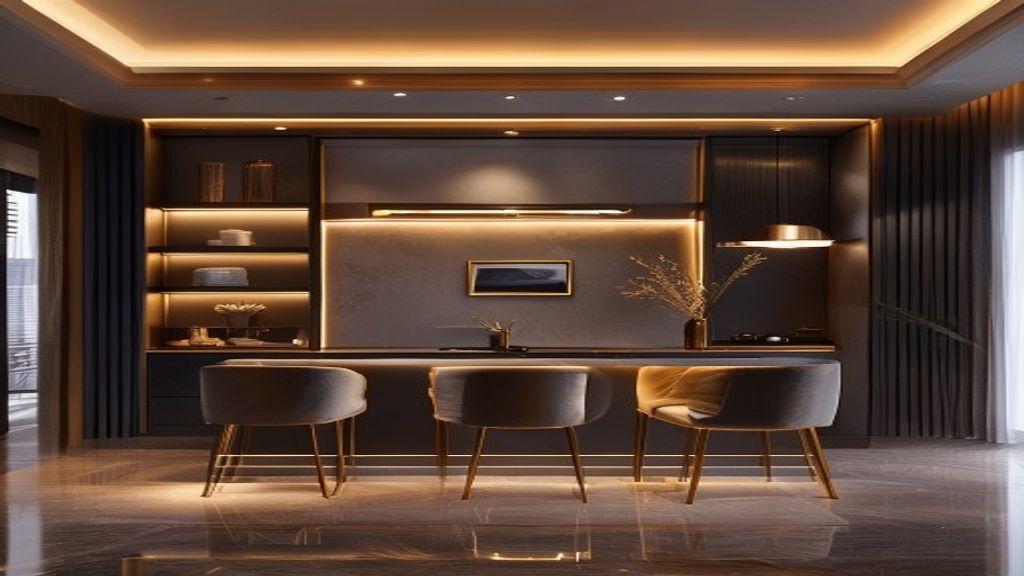
Lighting is arguably the most powerful variable in interior design. It shapes perception of space, influences emotional state, and drives physiological responses that affect productivity, comfort, and well-being. Yet in most construction projects, lighting is still treated as an afterthought — a fixture schedule appended to electrical drawings rather than a coordinated design discipline in its own right. At TechVisionEra Engineering, our interior decoration team approaches lighting with the same rigour we apply to structural calculations and MEP coordination. We use photometric simulation, BIM-coordinated fixture placement, and international standards including EN 12464, IESNA RP-1, and CIBSE LG7 to deliver solutions that perform on every axis: aesthetics, energy efficiency, occupant health, and code compliance.
The Three Layers of Light
The concept of layered lighting — ambient, task, and accent — is the foundation of every successful interior lighting scheme. Each layer serves a distinct psychological and functional purpose, and the interplay between them defines the character of a space. Designing any single layer in isolation produces rooms that feel either flat and institutional or dramatically uncomfortable. The discipline lies in balancing all three with precision.
Ambient lighting (general lighting) provides the base level of illumination across the entire room volume. It establishes visual comfort and spatial orientation. Sources include recessed downlights, surface-mounted LED panels, indirect cove systems, and decorative pendants. A well-designed ambient scheme avoids flat uniformity — moderate variation in intensity creates depth, reduces visual fatigue, and lends a space its fundamental mood signature. The goal is not maximum brightness, but appropriate brightness with architectural intentionality.
Task lighting delivers targeted illuminance where specific activities occur: desk surfaces, kitchen counters, reading nooks, vanity mirrors, surgical tables. Standards such as EN 12464-1 mandate minimum illuminance values at the task plane — 500 lux for office work, 300 lux for conference rooms, and 750 lux for precision manufacturing environments. Failing to meet these thresholds is a regulatory non-compliance in commercial and industrial settings. Our MEP engineering team integrates task-lighting circuits into the full electrical design to ensure code-compliant power distribution and proper short-circuit coordination. Accent lighting provides the drama: directed beams onto artwork, architectural features, textured surfaces, or retail merchandise create visual hierarchy — drawing the eye to the focal points that define the space's identity.
- Define ambient base level and calculate average horizontal illuminance across the room footprint
- Map all task zones and assign illuminance targets per EN 12464-1 or IESNA RP-1
- Identify accent focal points: artwork, facade textures, merchandise, landscape views
- Model beam angles and aiming geometry in photometric software (DIALux EVO or AGi32)
- Verify uniformity ratios (E_min / E_avg ≥ 0.60 for general areas per EN 12464-1)
- Confirm CRI ≥ 80 for general use; CRI ≥ 90 for retail, healthcare, and hospitality
CCT Selection — The Architect's Invisible Palette
Correlated Colour Temperature (CCT) is measured in Kelvin and describes the perceived warmth or coolness of a light source. The practical CCT range for interiors runs from 2700 K (warm white, mimicking incandescent lamps) through 4000 K (neutral white) to 6500 K (cool daylight). Selecting the wrong CCT for a space is one of the most common and most costly lighting mistakes in interior fit-out — and unlike a poorly positioned fixture, it affects every occupant simultaneously and is expensive to correct after installation.
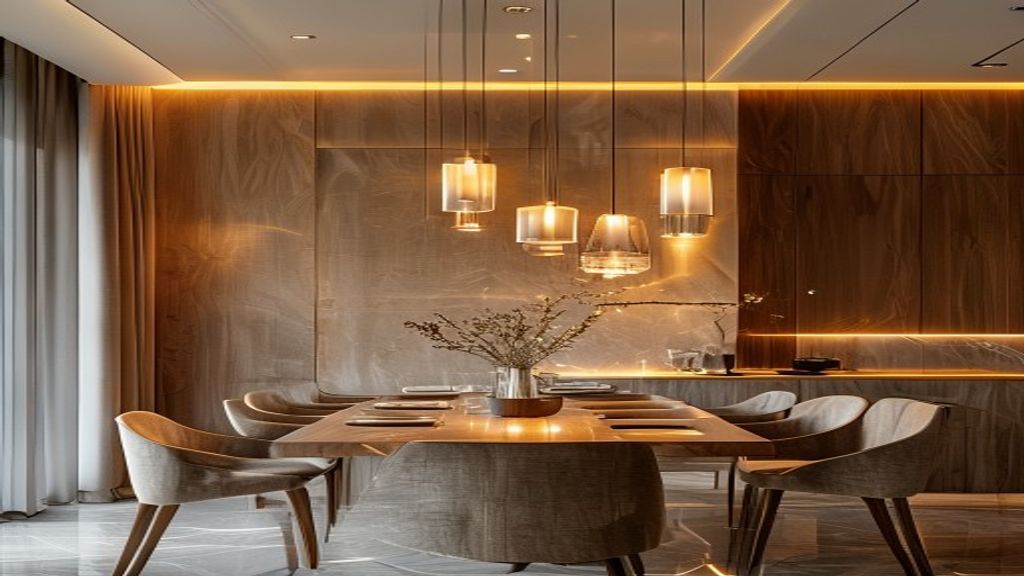
Space typology must drive CCT selection. Hospitality and residential spaces benefit from warm CCTs (2700–3000 K) that flatter skin tones, encourage relaxation, and create a sense of intimacy. Office environments perform best at neutral to slightly cool CCTs (3500–4000 K), which support alertness and reduce eye strain during prolonged screen work. Healthcare facilities and laboratories typically specify 4000–5000 K for accurate clinical assessment and colour-critical examination. Retail fashion requires careful zoning: warm CCTs in fitting rooms, neutral in the main display floor, and cool accent fixtures for window displays where merchandise must read clearly under both artificial light and daylight simultaneously.
Emerging research in human-centric lighting (HCL) and the WELL Building Standard v2 has introduced dynamic CCT systems — commonly called tunable white — that shift from warm morning tones to cool midday and back to warm evening light, synchronising artificial illumination with the human circadian rhythm. TechVisionEra specifies tunable-white driver systems from manufacturers such as Lutron, Osram, and Helvar, integrated with DALI-2 control protocols, for clients pursuing WELL certification or biophilic design compliance across their projects.
Choosing the wrong CCT is invisible on a fixture schedule but immediately felt by every occupant — it is one of the most consequential, and most easily prevented, decisions in interior lighting design.
Lumen Output, CRI, and Fixture Placement Strategy
Luminous flux (lumens) and illuminance (lux) are related but distinct metrics. A fixture's lumen output describes the total light emitted from the source; illuminance is the density of that light falling on a target surface, which depends on mounting height, beam angle, room geometry, and inter-reflection from surrounding surfaces. Designing to a lumen specification without running photometric calculations is a systematic failure mode — the result is either glare-inducing hotspots or shadowed dead zones, regardless of how generous the lumen budget appears on paper.
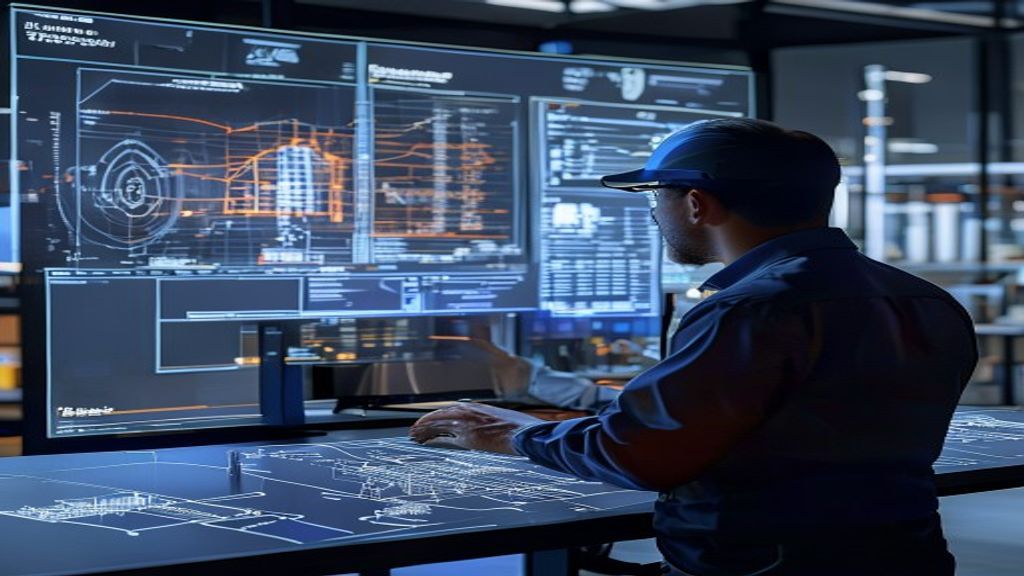
Fixture placement follows from a validated photometric model. In DIALux EVO or AGi32, we import room geometry directly from the BIM model (Revit or ArchiCAD), populate it with manufacturer IES photometric files, and calculate illuminance distribution maps at the task plane, mean cylindrical illuminance (the vertical face illumination that determines how well occupants' faces are rendered in the space), and wall luminance profiles. This model reveals whether the proposed layout meets target uniformity ratios and illuminance levels before a single ceiling penetration is made — saving expensive remedial work during fit-out and preventing the programme delays that invariably follow site-stage lighting corrections.
Colour Rendering Index (CRI) quantifies how accurately a light source renders the colours of objects compared to a reference illuminant. Standard LED panels ship at CRI 80–83, acceptable for circulation routes, corridors, and back-of-house areas. For retail, hospitality dining, and art galleries, CRI ≥ 90 is the minimum threshold. For museum-quality display spaces, CRI ≥ 95 with controlled UV and infrared emission is required to protect pigments and satisfy conservation curator specifications. We coordinate CRI requirements with the architectural design team during concept stage to align fixture specifications with the interior material and finish palette before procurement commitments are made.
Always request the full IES photometric file from your fixture manufacturer — not just the lumen datasheet or the marketing brochure. IES files encode the complete three-dimensional beam intensity distribution and are essential inputs for accurate DIALux EVO or AGi32 simulations. Without manufacturer IES data, your photometric model is an approximation, and the uniformity ratios that look compliant on screen may not match conditions on site.
Lighting Controls, DALI-2, and Dimming Architecture
A lighting layout is only as good as its control architecture. Even the finest photometric scheme loses much of its value if occupants cannot dim, scene-set, or adapt the light to their current activity. A well-specified control system also delivers the energy performance required by ASHRAE 90.1 and Part L of the UK Building Regulations — mandatory occupancy sensing and daylight-responsive dimming routinely reduces lighting energy consumption by 30–50% compared to manually switched circuits, a saving that typically pays back the control-system premium within two to four years on a commercial project.
DALI-2 (Digital Addressable Lighting Interface, IEC 62386) is the industry-standard protocol for commercial lighting control. Each DALI-2 driver is individually addressable, enabling any luminaire to be reassigned to a different group, scene, or schedule without rewiring the installation. DALI-2 standardised device types support dimming (DT6), colour temperature tuning (DT8), and full RGBW colour control (DT18). Its built-in diagnostic registers allow facilities managers to identify failed drivers remotely via the building management system, reducing maintenance costs and minimising occupant disruption. For residential-scale projects, DALI-2 increasingly competes with KNX and Zigbee mesh ecosystems; the protocol choice depends on integration requirements with HVAC, AV, and access control platforms.
Our MEP team integrates lighting control schematics directly into the Revit MEP coordination model, ensuring that DALI bus wiring topology, switch plate locations, occupancy sensor mounting positions, and daylight sensor sight lines are all resolved and clash-checked before the contractor receives the tender package. This upstream coordination prevents the common site problem of sensors installed in positions that trigger false activation or fail to detect occupants in peripheral zones — errors that typically require costly relocation work after practical completion.
Mood Engineering — Light as an Experiential Tool
Mood engineering is the deliberate application of lighting parameters — intensity, CCT, directionality, and spectral distribution — to produce a specific psychological or physiological response in the occupant. It is the discipline that distinguishes a specialist lighting designer from a general electrical consultant, and it is increasingly demanded by clients in hotel, retail, healthcare, and workplace sectors who recognise that the luminous environment directly influences the behaviour, performance, and emotional state of the people within it.
The core principles are grounded in environmental psychology and decades of field research. Low ambient intensity with warm CCT reduces physiological arousal and encourages social interaction — the signature of a successful restaurant or hotel lobby bar. High ambient intensity with neutral CCT supports sustained cognitive work — the profile of a productive open-plan office floor. Vertical surface illumination (wall washing) makes rooms feel larger and more welcoming; downward-only lighting creates intimacy but can induce spatial oppression when uniformity is poor. Shadows, used deliberately, are not a failure — they are a mood engineering instrument.
Biophilic lighting extends mood engineering into the physiological domain by incorporating circadian-aligned dynamic changes: gradual CCT shifts from 2700 K at dawn to 5000 K at solar noon, then descending through 3000 K at dusk, synchronising the building's luminous environment with human biology. Research cited in the WELL Building Standard documentation demonstrates that circadian-aligned lighting improves sleep quality by up to 30% in healthcare settings and measurably reduces self-reported fatigue in long-stay hotel guests and office workers. TechVisionEra integrates tunable-white specifications into decoration packages for clients pursuing WELL, BREEAM, or FITWEL certification credits.
- Define the emotional target for each zone: energise, focus, relax, socialise, or impress
- Set CCT profile per space typology — warm for hospitality, neutral for office, cool for clinical
- Apply vertical illumination to at least 40% of perimeter wall area to counter spatial compression
- Specify full dimming range — 100% down to 1% — for complete mood flexibility throughout the day
- Design a minimum of three scene presets per zone: Day, Evening, and Night/Cleaning
- Include dynamic circadian programme for healthcare, hotel, serviced apartment, and co-living projects
TechVisionEra's BIM-Integrated Lighting Design Workflow
At TechVisionEra Engineering, lighting design is a coordinated layer within our full Building Information Modelling (BIM) workflow, not a standalone discipline appended at the end of the design programme. Every luminaire is modelled as a parametric Revit family object with embedded photometric data, electrical load parameters, circuit designation, DALI group assignment, and maintenance factor. When a structural beam shifts or an HVAC duct reroutes around a constraint, lighting coordination updates automatically and the clash-detection model flags any resulting conflicts before they reach site.
Our standard lighting deliverable set is structured for international project delivery across the Gulf region, Southeast Asia, Europe, and the broader MENA market including Syria and the Levant. The package includes: IES-compliant photometric calculation reports to EN 12464-1 or IESNA RP-1; DIALux EVO simulation exports with false-colour illuminance and uniformity ratio plots; fixture schedules with manufacturer references, IES file citations, and maintenance factors; DALI-2 group and scene programming matrices; reflected ceiling plans in AutoCAD and Revit format; and — where certification is required — a WELL Feature L04 Visual Comfort assessment with Circadian Stimulus (CS) calculation report.
Whether you are developing a luxury hotel in Dubai, a corporate headquarters in Kuala Lumpur, a manufacturing facility in Germany, or a mixed-use residential tower in Damascus or Beirut, TechVisionEra delivers lighting design packages that are fully coordinated with structural, MEP, and architectural disciplines. This integration accelerates your design programme, eliminates costly site variations, and produces buildings where light quality is an engineered outcome rather than an installation-day surprise. Contact Vetta today to discuss your project and receive a tailored lighting design scope and fee proposal.
Key Takeaway
Great interior lighting is engineered before it is installed. By combining a disciplined three-layer composition framework, scientifically grounded CCT selection matched to space typology and occupant need, and BIM-coordinated photometric simulation validated against EN 12464-1 and IESNA benchmarks, TechVisionEra Engineering delivers lighting designs that are energy-compliant, biologically responsive, and architecturally coherent — on every project, in every market, from concept through commissioning.
Frequently Asked Questions
Layered lighting design is the practice of composing a room's illumination from three distinct functional layers: ambient (general) light that fills the volume, task light that delivers targeted illuminance at work surfaces, and accent light that creates visual hierarchy and drama. Each layer operates independently but is designed as part of a unified composition. Without layering, spaces end up either uniformly bright and institutional or theatrically dark with no functional light where it is needed. The balance between layers defines whether a space feels welcoming, productive, luxurious, or clinical. Layered design also provides occupants with flexibility — scenes can shift from a high-ambient working mode to a low-ambient evening mode by simply adjusting relative layer intensities, typically via a DALI-2 or KNX control system.
CCT selection should be driven by the primary activity and the emotional target of each space. As a practical guide: living rooms and hotel bedrooms perform best at 2700–3000 K (warm white) to encourage relaxation and flatter occupants; restaurant dining rooms and hospitality lounges suit 2700–3000 K for the same reason. Open-plan offices and co-working spaces work well at 3500–4000 K (neutral white) to support alertness and reduce eye strain. Healthcare examination rooms, laboratories, and pharmacy dispensing areas typically require 4000–5000 K for colour-accurate assessment. Retail requires zoning: warm in fitting rooms (2700–3000 K), neutral on the sales floor (3500–4000 K), and cooler accents for window displays (4000 K). For projects seeking WELL Building Standard compliance, tunable-white systems that shift CCT dynamically across the day are specified to support circadian rhythm alignment.
Lumens measure the total quantity of light emitted by a source — a property of the fixture itself. Lux measures the density of light falling on a surface (lumens per square metre) — a property of the lit environment. A 1000-lumen downlight mounted 3 metres above a desk delivers far fewer lux at the desk surface than the same fixture mounted 1.5 metres above it, because the light spreads over a larger area with distance. This is why specifying a fixture by its lumen rating alone is insufficient: the illuminance at the task plane depends on mounting height, beam angle, room dimensions, and surface reflectances. Professional lighting design uses photometric software such as DIALux EVO to calculate the actual lux levels delivered at the task plane and verify compliance with standards such as EN 12464-1 (500 lux minimum for office workstations) before installation.
Several standards apply depending on project location and building type. EN 12464-1 (European Standard: Light and Lighting — Lighting of Work Places, Indoor) is the primary standard for commercial interiors in the EU, UK, and most MENA markets adopting European codes. It specifies maintained illuminance (Em), uniformity ratio (U0), unified glare rating (UGR), and colour rendering index (Ra) for over 200 space types. In North America and internationally, IESNA RP-1 (Office Lighting), RP-3 (Healthcare), and RP-7 (Industrial) are the governing references. ASHRAE 90.1 and Title 24 govern energy performance. The WELL Building Standard v2 Feature L04 adds occupant health requirements: Circadian Stimulus (CS), Equivalent Melanopic Lux (EML), and Visual Comfort assessments. TechVisionEra designs to all of these standards depending on project jurisdiction and client certification targets.
Professional lighting design fees depend on project scale, complexity, and scope of deliverables. For a mid-size commercial office fit-out (1,000–5,000 m²), lighting design fees typically range from 0.5% to 1.5% of the mechanical and electrical construction value, or from USD 8,000 to USD 40,000 depending on the level of photometric simulation, control-system integration, and site inspection required. Luxury hospitality and retail projects command higher fees due to the detailed scene programming, manufacturer coordination, and mock-up reviews involved. Residential lighting design is typically quoted per room or per project area. TechVisionEra offers both standalone lighting design services and integrated packages where lighting is coordinated alongside MEP, structural, and architectural disciplines — which typically yields cost savings of 10–20% compared to engaging separate consultants.
Timeline depends on project stage and complexity. A concept lighting design for a 500 m² commercial space can be produced in two to three weeks, covering layout strategy, fixture family selection, CCT and CRI recommendations, and a schematic control architecture. A full detailed design with DIALux photometric reports, reflected ceiling plans, fixture schedules, and DALI-2 control documentation typically takes four to eight weeks for the same scale, depending on the number of review iterations and the speed of manufacturer data provision. Large hospitality or mixed-use projects with multiple zones and dynamic control systems require eight to sixteen weeks for detailed design. TechVisionEra works to project master programmes and routinely delivers lighting design packages within the architectural and MEP design programme, with BIM coordination running in parallel rather than sequentially.
Yes. TechVisionEra Engineering operates as a fully remote-capable design consultancy and routinely delivers lighting design packages for projects across the Gulf Cooperation Council, Southeast Asia, Europe, West Africa, and the MENA region without requiring on-site presence at the design stage. We receive architectural and structural BIM models from the project team, develop the lighting design in Revit and DIALux EVO, and issue coordinated drawing packages and photometric reports through collaborative cloud platforms. Remote delivery covers all standard deliverables: photometric calculations, reflected ceiling plans, fixture schedules, control schematics, and DALI-2 programming matrices. For projects requiring on-site commissioning or lighting scene sign-off, we coordinate with local certified lighting commissioning engineers in the project country, or arrange site visits for key milestones at project cost.
A complete professional lighting design package from TechVisionEra typically includes: (1) Concept lighting design report covering design intent, CCT strategy, and fixture family proposals; (2) Photometric calculation reports produced in DIALux EVO or AGi32 with false-colour illuminance plots and compliance tables to EN 12464-1 or IESNA RP-1; (3) Reflected ceiling plans (RCPs) in AutoCAD DWG and PDF, coordinated with the architectural reflected ceiling drawings; (4) Fixture schedules listing manufacturer, model, wattage, CRI, CCT, beam angle, lumen output, and maintenance factor; (5) Lighting control schematics showing DALI-2 bus topology, switch plate locations, sensor positions, and group/zone assignments; (6) Scene programming matrix listing all scene presets, dimming levels, and CCT settings per zone; (7) Equipment list with procurement quantities and specifications. Optional supplements include WELL Feature L04 Circadian Stimulus reports, Energy Performance calculations to ASHRAE 90.1, and commissioning protocols.
BIM (Building Information Modelling) transforms lighting design from a 2D drawing exercise into a fully coordinated 3D discipline. In a BIM workflow, luminaires are modelled as parametric objects in Revit with full geometric, photometric, electrical, and scheduling data embedded. This enables automatic clash detection between fixture bodies, structural beams, HVAC ductwork, and sprinkler heads — conflicts that are expensive to resolve on site but trivial to fix in the model. It also enables automatic circuit loading calculations, automatic area take-offs for energy calculations, and live coordination between the architectural reflected ceiling, the structural slab penetration drawings, and the MEP electrical distribution boards. When design changes occur — a room splits into two, a slab depth changes, a duct reroutes — the BIM model propagates the impact across all disciplines simultaneously rather than requiring manual drawing updates on separate files. TechVisionEra uses Revit MEP for all commercial lighting projects.
DALI-2 is the second generation of the Digital Addressable Lighting Interface protocol, standardised under IEC 62386. It is a two-wire digital communication bus that individually addresses every driver or ballast on the network, enabling any luminaire to be independently dimmed, grouped, scene-programmed, or scheduled without rewiring. DALI-2 improves on the original DALI standard by mandating device certification tests (ensuring interoperability between products from different manufacturers), introducing standardised device types for colour temperature (DT8) and RGBW colour (DT18), and providing comprehensive device diagnostics — so facilities managers can identify a failed lamp or driver remotely via the BMS dashboard rather than by physically inspecting the ceiling. It is preferred over proprietary 0-10V dimming for commercial projects because of its open interoperability, diagnostic capability, and the ability to add or reconfigure groups and scenes via software changes alone.
Light is the primary external signal that synchronises the human circadian rhythm — the approximately 24-hour biological clock that regulates sleep, alertness, hormone secretion, metabolism, and immune function. The circadian system responds primarily to short-wavelength (blue-enriched) light detected by intrinsically photosensitive retinal ganglion cells (ipRGCs) containing the photopigment melanopsin, which is most sensitive at around 480 nm. Exposure to high Melanopic Equivalent Daylight Illuminance (mEDI) during the morning and midday suppresses melatonin and promotes alertness; warm, low-intensity light in the evening allows melatonin production to rise and supports sleep onset. Buildings that provide high CCT, high-mEDI light during daytime work hours and shift to warm, dim light in the evening — particularly hotels, hospitals, and residential developments — measurably improve occupant sleep quality, daytime performance, and mood. The WELL Building Standard v2 Feature L04 formalises these requirements and TechVisionEra provides Circadian Stimulus calculation reports as part of WELL-targeted lighting packages.
Yes. TechVisionEra Engineering has direct experience delivering design packages for projects in Syria, Lebanon, Jordan, the Gulf Cooperation Council, and the broader Arab world, including residential towers, commercial offices, hospitality venues, and healthcare facilities. We are fully familiar with the regulatory context, procurement landscape, and construction methodologies in the Syrian and Levant markets. For Syrian projects, we can design to international standards (EN 12464-1, IESNA) or to the Syrian Arab Standard (SAS) as required by the client and local authority. We also understand the practical supply chain constraints in the region and specify fixtures from manufacturers with established distribution in the MENA market — avoiding specification of products unavailable for import. Remote delivery is standard for our MENA work, with all documentation issued in both English and Arabic upon request. For on-site commissioning and supervision, we can mobilise to Syria or coordinate with trusted local partners.