Interior decoration defines how a space feels, functions, and speaks to the people who inhabit it. Whether you are designing a private villa in Malaysia, a corporate headquarters in Dubai, or a boutique hotel in Istanbul, the foundational choice between modern and classic aesthetics shapes every subsequent decision — from structural finishes and MEP coordination to furniture selection and lighting schemes. At TechVisionEra's decoration division, we guide clients through this defining question on every project, and the right answer is rarely self-evident.
What Defines Modern Interior Decoration?
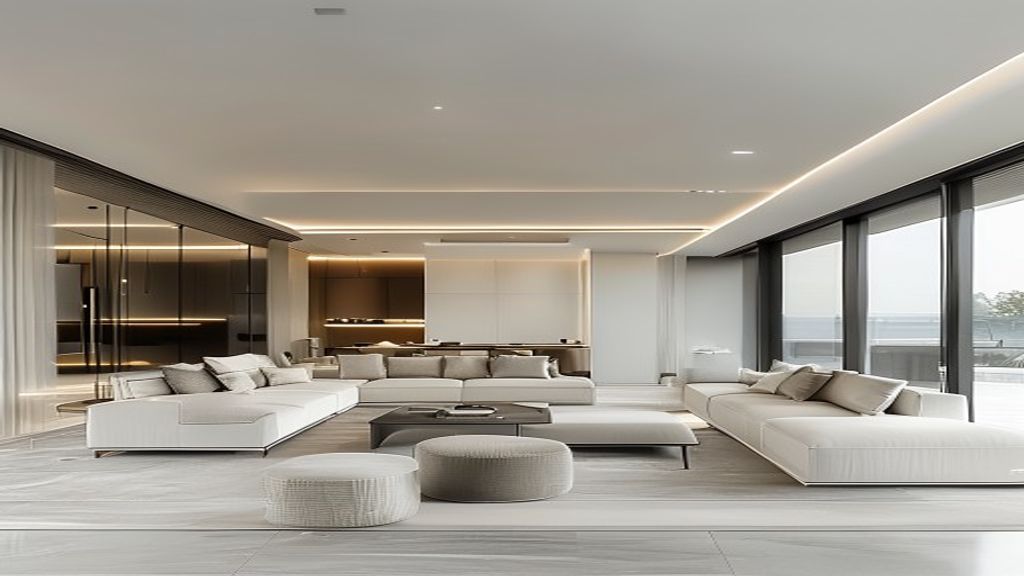
Modern interior decoration emerged in the early twentieth century as a deliberate reaction to Victorian excess. It celebrates clean lines, functional simplicity, and the honest expression of materials — exposed concrete, brushed steel, frameless glass, and engineered timber are all signature elements. The modern aesthetic operates on a single governing principle: every element must earn its place. Decorative flourishes are minimised in favour of geometric precision, controlled proportion, and uninterrupted spatial flow.
Colour palettes in modern interiors tend toward neutrals — whites, warm greys, charcoals, and muted beiges — punctuated by bold accent colours or the natural tones of raw materials. Furniture sits low, with strong horizontal emphasis, and upholstery favours smooth, durable textiles over ornate brocades. Lighting design is integral to the modern vocabulary: recessed downlights, linear LED strips concealed within architectural joinery, and sculptural pendant fixtures create the layered, precisely controlled atmosphere that modern spaces require.
From a technical standpoint, modern interiors demand careful coordination with MEP engineering from the earliest design stages. Concealed ductwork, integrated smart-home cabling, flush-fitted speaker systems, and invisible sprinkler heads are not afterthoughts — they are fundamental to the design language itself. This seamless integration of building services into the architectural fabric is where an engineering-led design firm delivers value that a purely aesthetic practice cannot match.
The Timeless Allure of Classic Interior Design
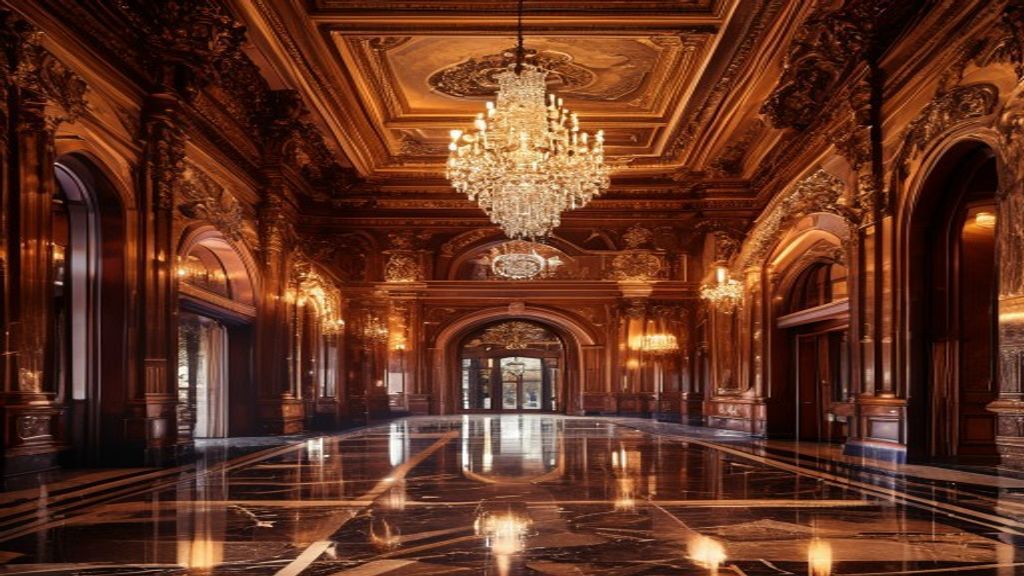
Classic interior design draws from centuries of European, Middle Eastern, and Asian decorative traditions. Whether the reference point is French Baroque, English Georgian, Ottoman Revival, or Art Deco, classic interiors share a defining vocabulary: ornamentation, symmetry, and master craftsmanship. Elaborate cornices, coffered ceilings, wainscotting, arched doorways, and decorative pilasters communicate permanence and prestige in ways that restrained modern spaces deliberately avoid.
Materials in classic interiors are rich and deliberately layered: marble flooring with inlaid geometric borders, silk and velvet drapery, hand-carved timber joinery, and gilded metalwork. The colour palette is warmer and more complex — deep burgundies, forest greens, ivory whites, and gold tones drawn from centuries of decorative tradition. Furniture is taller, more sculptural, and often the focal centrepiece of a room rather than a quiet backdrop.
Classic design is far from merely nostalgic. International clients building landmark properties — heritage hotels, government administrative buildings, cultural institutions, or high-net-worth private residences — frequently specify classic interiors to communicate institutional gravitas and cultural continuity. Our architectural design team regularly integrates classic interior narratives with contemporary structural systems, creating spaces that feel historically grounded while performing to the full technical demands of modern occupancy, energy codes, and accessibility standards.
Modern vs Classic: Key Design Differences at a Glance
Understanding the practical differences between these two approaches helps you evaluate which is better suited to your project brief, budget, and long-term vision. The following benchmarks, drawn from global industry data, reflect the real-world implications of each style choice at the programming and procurement stages.
Modern interiors typically offer faster installation timelines, lower long-term maintenance costs, and better compatibility with smart-building technology and energy efficiency systems. Classic interiors command premium material and skilled labour costs, but tend to retain or appreciate in perceived value over time — a particularly important consideration for clients developing hospitality assets, embassies, or high-end residential properties intended to hold value across decades.
The right interior style is not the one that photographs best — it is the one that functions flawlessly, ages gracefully, and resonates authentically with the people who live and work within it every day.
How to Choose the Right Style for Your Space
Choosing between modern and classic is rarely a clean binary decision. The most effective approach begins with structured analysis of project constraints and client values before any aesthetic commitment is made. Our design team works through the following evaluation framework with every new client brief, regardless of project scale or geography.
- Define the primary function of the space: residential, hospitality, corporate, institutional, or mixed-use
- Establish a realistic budget envelope for finishes, furniture, bespoke joinery, and specialist installation
- Identify the target user profile: age demographics, cultural background, lifestyle preferences, and brand positioning
- Assess structural constraints including ceiling heights, column grid spacing, floor load capacity, and existing MEP routes
- Review local planning authority requirements and any heritage designations that may prescribe or restrict aesthetic elements
- Evaluate long-term maintenance capacity — classic finishes require specialist care and periodic restoration budgets
- Consider resale and repositioning value, particularly for investment properties and operator-managed hospitality assets
- Align the chosen style with the building's exterior architectural language and surrounding urban context
For projects in the Gulf Cooperation Council states, Southeast Asia, and the Levant region, cultural context plays a decisive role in this analysis. Classic styles with regional references — Islamic geometric patterns, Arabesque detailing, traditional mashrabiya timber screens, and regional stone cladding — often resonate far more powerfully with local markets and planning authorities than imported minimalism. Our team has extensive experience interpreting these vernacular design traditions within contemporary construction systems, producing interiors that feel culturally authentic and technically sophisticated in equal measure.
The Transitional Approach: Blending Both Worlds
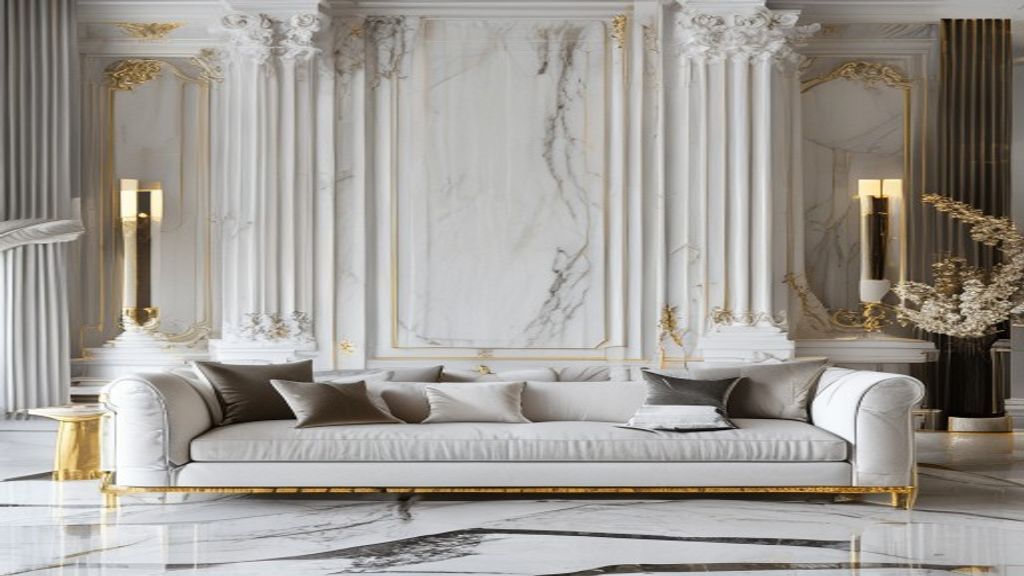
The most commercially successful interior projects of the past decade have not been purely modern or purely classic. They have been transitional — a disciplined synthesis of both vocabularies. Transitional design combines the spatial efficiency and technical precision of modernism with the material richness and human warmth of classicism. A transitional interior might feature clean-lined contemporary furniture beneath ornate coffered ceiling plasterwork, or deploy a single classical architectural motif as a commanding focal point within an otherwise restrained, minimal space.
Executing transitional design well requires rigorous creative control and analytical discipline. Without a strong guiding concept held consistently across all surfaces and specifications, the blend tips rapidly into visual incoherence. At TechVisionEra, we use BIM-coordinated 3D visualisation at the design development stage to test visual balance, proportion, material compatibility, and lighting interaction before any procurement or fabrication begins. This analytical approach prevents costly design errors that arise when transitional schemes are assembled through intuition rather than coordinated design intent.
When blending modern and classic elements, limit your ornamental references to one focal plane per room — typically the ceiling or a single feature wall. Distributing classical detail across all surfaces simultaneously dilutes its impact and creates visual noise that diminishes both vocabularies. A single coffered ceiling in an otherwise clean, minimal room reads as intentional luxury; the same motif applied to every surface reads as indecision. Deliberate restraint is the discipline that elevates transitional design from eclectic to genuinely elegant.
Structural and MEP Implications of Your Style Choice
Interior style choice carries direct and often underestimated implications for the structural and building services engineering of your project. Classic interiors with high ceilings, elaborate cornice and ceiling plasterwork, and heavy stone cladding impose significantly greater dead loads than light-touch modern fit-outs. Our structural engineering team coordinates with decoration designers from the earliest briefing stages to ensure that ceiling suspension systems, stone cladding anchor brackets, and ornamental elements are properly engineered — a critical safety requirement in seismic zones across the Middle East, Turkey, and Southeast Asia.
Modern interiors demand full architectural concealment of all building services. Exposed ductwork, surface-run conduit, and visible ceiling sprinkler drops are fundamentally incompatible with the modern aesthetic, meaning MEP systems must be routed, coordinated, and detailed with architectural precision. This coordination — between MEP engineers, interior designers, and structural consultants — is most effectively managed within an integrated delivery model where all disciplines share a live BIM model and resolve clashes in the design environment rather than on-site at significant cost.
For high-specification interior projects requiring quality assurance at the installation stage, our onsite engineering supervision team verifies that stone installation tolerances, joinery fit-out quality, waterproofing, and services integration meet the design intent before finishes are applied. Catching deviations early prevents the expensive remediation work that routinely inflates fit-out budgets when skilled supervision is absent.
Investment Value and Long-Term Asset Performance
Interior decoration is a long-term investment in asset value, not merely an aesthetic preference. For hotel and hospitality projects, design style directly influences room rate positioning, occupancy, and competitive differentiation. Industry benchmarks indicate that a well-executed, authentic classic interior can command a 20–35% premium in average daily rate compared to a generic modern fit-out in an equivalent location and star category. For corporate headquarters and branded workplaces, the interior environment demonstrably affects talent attraction, employee retention, and client perception — measurable returns that justify substantial design investment at the outset of the project lifecycle.
For residential investment projects, the return calculation depends on exit strategy. Modern interiors appeal to a broader buyer and tenant pool in urban markets, are faster to stage and market, and require less explanation to international purchasers unfamiliar with regional design traditions. Classic interiors in premium segments attract a narrower but highly motivated buyer specifically seeking the prestige, craftsmanship density, and cultural resonance that only this style communicates. Understanding your long-term asset strategy — whether to hold, lease, or trade — is therefore integral to the style decision, not separate from it.
Whatever direction your project takes, the quality of execution ultimately determines the outcome. A poorly executed classic interior underperforms a thoughtfully executed modern one; an inspired modern scheme delivered with inferior materials fails entirely on its own terms. Contact TechVisionEra Engineering to discuss how our integrated team of designers, structural engineers, MEP specialists, and onsite supervisors can help you make the right style choice — and deliver it to the standard your investment deserves.
Key Takeaway
Modern and classic interior styles each offer compelling and distinct advantages that suit different project types, budgets, and long-term goals. Modern excels in technical integration, spatial efficiency, smart-building compatibility, and lower long-term maintenance. Classic commands material richness, cultural resonance, and long-term prestige value. The most successful projects choose deliberately — aligning aesthetic direction with structural capacity, MEP coordination, cultural context, and investment objectives from the very first briefing — and deliver that choice with the precision that only fully integrated engineering and design oversight can consistently achieve.
Frequently Asked Questions
Modern interior decoration prioritises clean lines, functional simplicity, and the concealment of decorative detail in favour of spatial flow and material honesty. Classic interior decoration draws from historical European, Middle Eastern, and Asian design traditions, emphasising ornamentation, symmetry, and rich materials including marble, hand-carved timber, and gilded metalwork — expressed through architectural elements like cornices, pilasters, coffered ceilings, and arched openings. The choice between them affects not just aesthetics but material costs, structural load requirements, MEP coordination complexity, procurement lead times, and long-term maintenance obligations.
Classic interior decoration typically costs 30–45% more than a comparable modern fit-out at the same quality tier. The premium reflects the higher cost of specialist ornamental finishes, hand-crafted millwork with long lead times, natural stone with complex pattern-matching and inlay work, and the skilled installation labour required to achieve acceptable tolerances. Modern interiors can also reach high price points when smart-home systems, custom joinery, and luxury materials are specified, but the baseline cost per square metre is generally lower. For budget-constrained projects, transitional design offers a practical middle path: incorporating classical focal elements within a modern base to achieve material richness without the full classic cost premium.
A fully classic interior fit-out for a large residential or hospitality project typically requires 12–20 months from initial brief to practical completion. This timeline covers concept and schematic design (6–8 weeks), design development with BIM coordination (8–12 weeks), procurement of bespoke elements including custom millwork with 6–8 week fabrication lead times, specialist stone sourcing and fabrication, followed by a construction and installation phase of 4–8 months depending on project scale and site complexity. Modern fit-outs can generally be delivered in 8–14 months for comparable projects because procurement lead times for standardised components are shorter and installation tolerances are less demanding. TechVisionEra provides detailed programme schedules at the briefing stage so clients can plan procurement phasing and financing drawdowns accurately.
Yes — the deliberate combination of modern and classic elements is called transitional design, and it accounts for approximately 72% of luxury interior projects globally. Successful transitional interiors require a clear overarching concept and strong design discipline to prevent visual incoherence. The most effective approach limits classical ornamental references to one focal plane per room — typically the ceiling or a single feature wall — while maintaining restrained, clean treatment on all other surfaces. TechVisionEra uses BIM-coordinated 3D visualisation to test the balance between the two vocabularies before procurement begins, ensuring the final result reads as intentional elegance rather than stylistic indecision.
Classic interiors impose significantly greater structural demands than modern fit-outs. Heavy marble flooring with inlaid borders requires verification of floor slab capacity and substrate preparation to prevent cracking or delamination under load. Ornate suspended gypsum ceiling systems require engineered fixing details that comply with dead load and seismic requirements in the project jurisdiction. Stone wall cladding must be mechanically anchored to the structural substrate with properly designed bracket systems rather than adhesive bonding alone. TechVisionEra's structural engineering team reviews all heavy finish specifications at the design development stage, issues engineered fixing details, and ensures full compliance with Eurocode, ACI, and applicable regional building authority requirements.
In modern interiors, all MEP services — HVAC ductwork, electrical conduit, plumbing, fire suppression pipework, data and AV cabling — must be fully concealed within the building fabric, with only flush-fitted outlets, linear diffusers, and recessed fixtures visible at the finished surface. This demands early-stage coordination between the interior designer and MEP engineer to allocate sufficient ceiling void depth, establish service routes that avoid architectural features, and specify flush or recessed outlet types compatible with each interior finish. In classic interiors, some degree of visible integration is permitted — period-appropriate light fittings, decorative grilles, and ornamental register covers — but modern safety, efficiency, and accessibility requirements still demand rigorous coordinated planning. TechVisionEra uses an integrated BIM workflow that resolves all MEP-to-interior coordination issues before construction begins.
Yes. TechVisionEra delivers full interior decoration design services remotely to clients across the Gulf, Southeast Asia, Europe, North Africa, and North America. Our workflow uses BIM collaboration software, high-resolution photorealistic rendered visualisations, virtual reality walkthrough files, and structured review sessions via video conference to maintain design quality and client alignment without physical co-location. We manage procurement coordination, supplier liaison, material specification, and shop drawing review entirely remotely. For clients requiring onsite supervision at the construction and installation phase, we deploy site engineers independently of the remote design team, providing continuous quality oversight and weekly photographic reporting throughout the installation programme.
Yes. TechVisionEra has direct operational experience in Syria and across the broader Levant region, including Lebanon, Jordan, and Iraq. We provide onsite engineering supervision for interior decoration projects — covering installation quality control, tolerance and finish verification, materials compliance checking against the approved specification, and structured progress reporting to the design team and client. Our supervisors are familiar with local contractor capabilities, material sourcing constraints, and the technical standards applicable in each jurisdiction. For reconstruction and development projects in Syria specifically, we coordinate the full design-to-supervision lifecycle from schematic interior design through procurement guidance to installation oversight, working within the logistics and supply chain realities of the current construction environment.
For boutique hotels and luxury hospitality projects, transitional design — incorporating classic material richness within a modern operational framework — typically delivers the strongest commercial return. Classic and heritage-inspired interiors consistently achieve higher average daily rates, stronger guest review scores, and better social media shareability than generic modern equivalents at the same star category and location. However, the operational demands of hotel environments — durability under intensive daily use, ease of deep-cleaning, compliance with fire safety classifications, accessibility requirements, and integration of modern property management and AV technology — require a modern engineering and systems backbone. TechVisionEra designs hospitality interiors that satisfy both criteria: visually rich and culturally resonant at the guest experience level, technically compliant and operationally durable at the engineering level.
TechVisionEra applies the structural, fire safety, accessibility, and fit-out standards applicable to each project jurisdiction. For European and internationally benchmarked projects, we reference Eurocode structural standards and EN fire classification requirements for interior finishes and ceiling systems. For Gulf region projects, we apply the relevant municipality requirements and GCC construction standards alongside international benchmarks. Interior finish materials are specified with verified fire spread and smoke generation classifications appropriate to the occupancy type — Class A or Class B depending on the space function. All structural fixing details for heavy classic finishes are engineered to comply with the seismic zone requirements of the project location, referencing ASCE 7, Eurocode 8, or the local equivalent standard as applicable.
BIM transforms interior decoration from an iterative, document-based process into a coordinated, data-rich design environment. For interior projects specifically, BIM enables automated clash detection between MEP service routes and ceiling or wall finish profiles before construction begins — preventing the on-site discoveries that cause costly programme delays and abortive installation work. It generates accurate material quantity take-offs directly from the model, reducing procurement risk and supplier negotiation time. It allows structural, MEP, and interior disciplines to work simultaneously on a shared model with version control and full audit trails. For clients, BIM-generated photorealistic visualisations and virtual reality walkthroughs enable informed design decisions to be made during the design phase rather than during the construction phase when changes carry penalty costs. TechVisionEra applies BIM as standard on all projects above a defined size and complexity threshold.
For any commercial interior project, the briefing stage should establish five things clearly before design work begins: the functional performance requirements of the space, including occupant density, operational workflows, acoustic targets, and thermal comfort standards; the brand or institutional identity the interior must communicate to its users and visitors; the budget envelope including a realistic contingency allocation for bespoke elements; the programme constraints including any phasing requirements if the building remains operational during fit-out; and the long-term maintenance and operational budget available after practical completion. A consultant who addresses all five of these dimensions — rather than proceeding directly to aesthetic preferences — is operating with an integrated understanding of design value. At TechVisionEra, our initial briefing process is structured around precisely these five dimensions. Contact us to schedule a project briefing consultation with our design and engineering team.