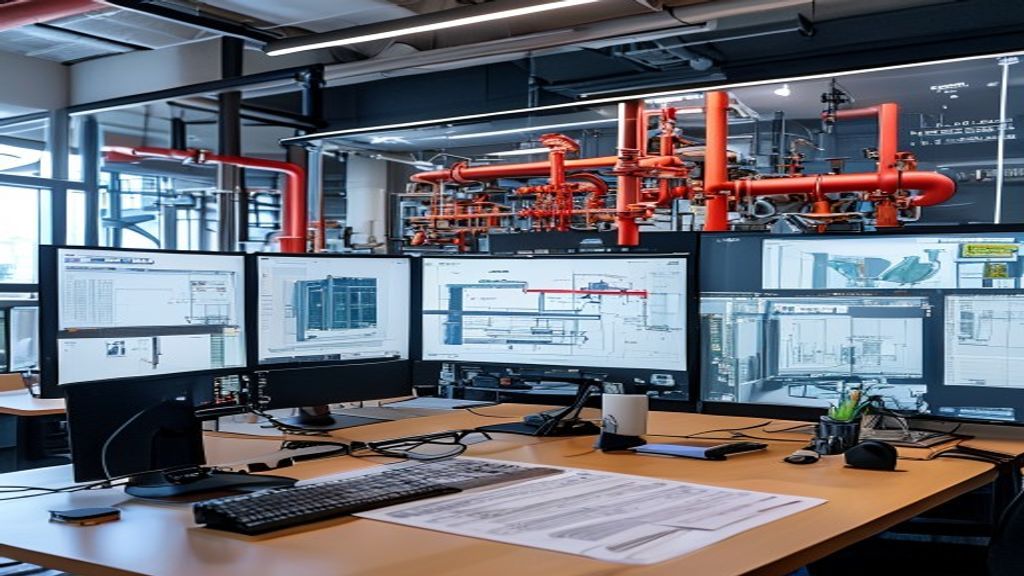
Fire protection engineering sits at the crossroads of life safety, code compliance, and mechanical coordination. A fire suppression system is not a commodity installation — it is a precision-engineered response to a specific hazard profile, occupancy class, and available water supply. When designed with genuine engineering rigour, these systems contain fires within the first sixty seconds of activation, protecting lives and limiting property loss to a fraction of what an uncontrolled fire would cause. When designed to minimum code only, critical gaps can leave occupants and assets dangerously exposed.
As specialist MEP engineers, TechVisionEra Engineering designs fire suppression systems to the highest international benchmarks — NFPA 13, BS EN 12845, FM Global Data Sheets, and GCC fire codes — coordinated in Revit BIM and documented for global Authority Having Jurisdiction (AHJ) submission. This guide covers the complete engineering lifecycle: hazard and occupancy classification, system type selection, sprinkler hydraulics, clean and gaseous agent systems, code compliance, BIM coordination, and commissioning documentation.
Why Fire Suppression System Design Demands Engineering Precision
The minimum standard for fire suppression in most jurisdictions is described in prescriptive terms: minimum sprinkler spacing, minimum water supply pressure, pipe sizes drawn from a schedule. These prescriptive methods produce systems that are compliant on paper but rarely optimised for the specific hazard they face. A hydraulically calculated design, by contrast, starts from the actual fire scenario: what combustion load is present, how fast a fire might grow, what suppression density is required across the design area, and whether the available water supply can reliably deliver that density at the required residual pressure.
Occupancy hazard classification is the cornerstone of every NFPA 13 design. Light Hazard occupancies — offices, hotels, hospitals, churches — have low combustion loads and modest hydraulic demands. Ordinary Hazard Group 1 and 2 occupancies — light manufacturing, retail, warehouses with palletised goods — require higher design densities and larger water supply margins. Extra Hazard occupancies — woodworking plants, spray painting booths, high-piled storage — push the design to its limits, often requiring ESFR heads, in-rack sprinklers, or foam-water systems. Misclassifying an occupancy is one of the most consequential and frequently encountered errors in fire protection design.
The insurance dimension of fire suppression design is equally significant. FM Global's Property Loss Prevention Data Sheets set requirements that frequently exceed code minimums — particularly for industrial, logistics, and high-value commercial assets. For clients seeking to minimise property insurance premiums on large assets, designing to FM Global requirements from the outset is a commercially rational decision. The marginal additional engineering and construction cost is typically recovered within a few policy cycles through reduced premiums and more favourable coverage terms.
System Type Selection: Matching Suppression Technology to Hazard
Not every fire hazard is best addressed with a wet pipe sprinkler system. The selection of suppression technology must follow a systematic analysis of the hazard, the environment, the water availability, and the acceptable collateral effects of suppression. Electrical equipment, irreplaceable archives, and sub-zero environments all demand alternative approaches to water-based systems.
- Wet Pipe Sprinkler: Water-filled pipes with heat-actuated heads. Fastest response, simplest maintenance, lowest cost. Suitable for all non-freezing occupied buildings.
- Dry Pipe Sprinkler: Nitrogen or air-pressurised pipes. Water only enters when a head opens. Used in unheated warehouses, parking structures, and cold storage.
- Pre-action System: Requires a secondary detection event before water enters the pipes. Used in data centres and archival storage where accidental discharge would cause severe damage.
- Deluge System: All heads open simultaneously across a zone. Used in high-hazard areas requiring instantaneous total coverage — transformer bays, aircraft hangars, flammable liquid process areas.
- Clean Agent Total Flooding: FM-200, Novec 1230, or inert gas (Inergen, Argonite). Used for enclosed spaces with sensitive electronics, archives, and switch rooms.
- CO₂ Total Flood: Effective for deep-seated hazards — marine engine rooms, printing presses. Requires complete evacuation before discharge.
- High-Expansion Foam: Used for aircraft hangars, LNG facilities, and large-volume combustible liquid storage.
- Water Mist: High-pressure fine droplets provide suppression with dramatically reduced water volume. Used in heritage buildings, hotel rooms, and marine applications.
Each system type has specific design standards, hydraulic parameters, and commissioning requirements. Selecting the wrong technology creates a cascade of costly redesigns. TechVisionEra's fire protection engineers begin every project with a structured hazard analysis before any hydraulic calculation is performed — ensuring the system selection is defensible, code-compliant, and fit for purpose.
Sprinkler System Hydraulics: Designing Beyond the Pipe Schedule
NFPA 13 permits two methods for sizing sprinkler piping: the pipe schedule method (prescriptive, based on tabulated maximum numbers of heads per pipe size) and the hydraulic calculation method (engineering-based, calculating pressure loss through the complete system to verify the remote design area receives the required water density). The hydraulic calculation method almost always produces a more efficient, cost-effective system — particularly in large or complex buildings where the pipe schedule method would significantly over-size most of the distribution piping.
A hydraulic calculation starts with the design area — the most hydraulically challenging zone in the system, typically the most remote area on the highest elevation floor. The engineer calculates the flow demand at each head within this area (density × coverage area per head), then traces pressure and flow back through the distribution piping to the riser and ultimately to the water supply connection. The water supply must provide the calculated demand plus a minimum residual pressure margin. Fire flow test data from a hydrant test — or utility-provided static and residual pressures — forms the basis of this supply verification, and the design must demonstrate an adequate margin between system demand and supply capability.
Sprinkler head selection has a direct impact on hydraulic demand and fire performance. Standard Response heads (RTI ≥ 80 m½·s½) are widely used in ordinary commercial applications. Quick Response heads (RTI ≤ 50 m½·s½) are mandated in light hazard occupancies under NFPA 13 for life-safety-critical applications. ESFR (Early Suppression Fast Response) heads are designed to suppress — not merely control — high-challenge warehouse fires, eliminating the need for in-rack sprinklers in many configurations. Head selection, ceiling height, and commodity classification must all align precisely for ESFR systems to perform as designed.
When designing ESFR warehouse systems, verify the water supply demand at concept stage — ESFR systems require significantly higher pressures and flow rates than standard designs. Engaging with the local water authority or sizing a dedicated fire pump early prevents hydraulic supply shortfalls that would force a complete redesign or expensive pump upgrades mid-construction. A preliminary supply check takes a few hours of engineering time; a redesign after tender award costs multiples of that.
Clean Agent and Gaseous Suppression Systems
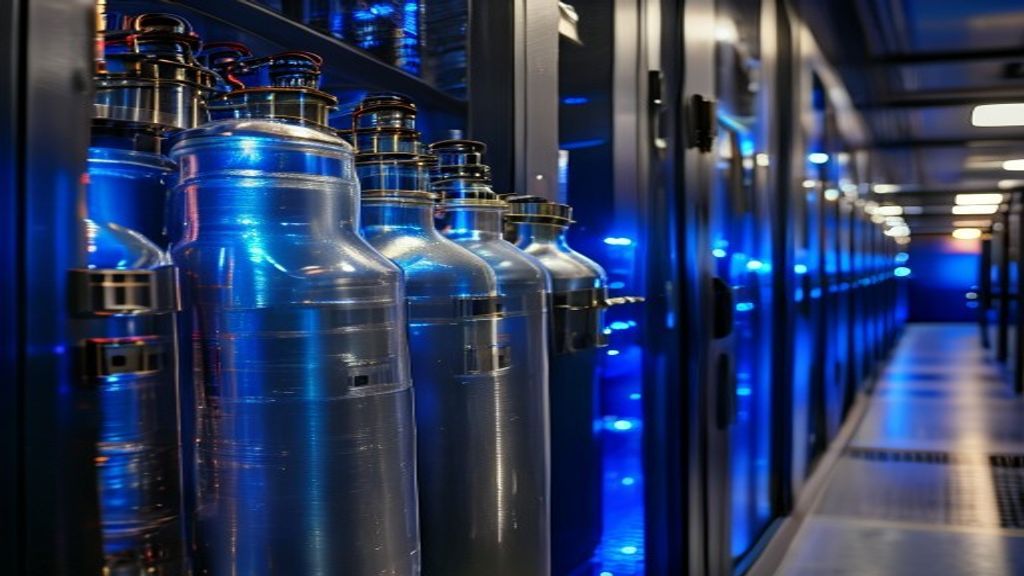
Clean agent suppression systems are specified where water-based suppression would cause damage equal to or greater than the fire itself. Data centres, broadcasting equipment rooms, archival vaults, museum collections, medical imaging suites, and substation control rooms all demand suppression agents that leave no residue, cause no secondary damage, and allow the protected space to return to full operation within hours of activation. TechVisionEra designs these systems to NFPA 2001 (Standard on Clean Agent Fire Extinguishing Systems) and BS EN 15004.
The dominant commercial clean agents today are FM-200 (HFC-227ea) and Novec 1230 (FK-5-1-12). FM-200 has an outstanding track record and remains widely available globally, but its Global Warming Potential of 3,220 is attracting increasing regulatory scrutiny in some jurisdictions. Novec 1230 offers a GWP below 1 with equivalent fire suppression performance. Inert gas systems — Inergen (IG-541), Argonite (IG-55), and pure nitrogen (IG-100) — use naturally occurring gases to reduce oxygen concentration to approximately 12.5%, suppressing flaming combustion while remaining safe for brief human occupancy at design concentration. Agent selection must account for local regulatory frameworks, availability, enclosure volume, and the client's environmental commitments.
A clean agent suppression system that fails room integrity testing provides zero protection — the engineering rigour applied to enclosure design is as critical as the agent selection itself.
Clean agent system design requires precise room integrity analysis. Total flooding systems depend on maintaining agent concentration throughout the design hold time (typically 10 minutes minimum under NFPA 2001). Any leakage through unsealed penetrations, undercut doors, or HVAC openings depletes the agent before suppression is complete. Room integrity testing (door fan test) per NFPA 2001 Annex B is mandatory before system acceptance, and the design must account for the room's actual leakage characteristics. Where a room fails integrity testing, pressure relief vents or enclosure remediation work is required before the system can be commissioned. This is a design consideration from the outset, not a commissioning afterthought.
Code Compliance: NFPA 13, BS EN 12845, FM Global, and GCC Fire Codes
Fire suppression systems are subject to a layered compliance framework: international standards, national adoption codes, and local AHJ requirements. NFPA 13 is the most widely adopted sprinkler design standard globally, forming the basis of the UAE Fire and Life Safety Code (FLSC), Saudi Civil Defense requirements, and the technical annexes of most GCC municipal fire codes. NFPA 13 defines occupancy classifications, water supply requirements, hydraulic calculation methodology, obstruction rules, and installation requirements for every recognised sprinkler system type. Its 2022 edition introduced updated commodity storage classifications and significant changes to ESFR design parameters.
In Europe and many Commonwealth markets, BS EN 12845 (Fixed firefighting systems — Automatic sprinkler systems — Design, installation and maintenance) governs design and installation. EN 12845 differs from NFPA 13 in its hazard classification vocabulary (LH, OH1–OH4, HH), its design point methodology, and specific requirements for pump and tank sizing. International projects frequently require harmonisation of both standards — particularly where a US-based owner's insurer enforces NFPA while the local AHJ enforces EN 12845. TechVisionEra has direct experience navigating these dual-standard environments. Our structural engineering and MEP teams coordinate closely to ensure that fire suppression loads — particularly heavy water storage tanks and fire pump bases — are fully accounted for in the structural design.
FM Global Data Sheets represent the gold standard for property protection in industrial and high-value commercial assets. FM Global DS 2-0 (Installation Guidelines for Automatic Sprinklers), along with commodity-specific data sheets, sets requirements that frequently exceed NFPA 13 minimums in design density, water supply margin, sprinkler spacing, and obstruction clearances. For example, FM Global requires a 250 psi system hydrostatic test versus NFPA 13's 200 psi minimum, and imposes tighter documentation of water supply reliability. Buildings designed to FM Global standards typically earn better insurance rates and more favourable terms — a direct ROI on the additional engineering investment.
- Hazard and occupancy classification report
- Water supply analysis (flow test data or utility-confirmed pressures)
- Hydraulic calculations — NFPA 13 or EN 12845 compliant, stamped by a qualified engineer
- System layout drawings — plan view at all floors and mezzanines
- System isometric drawings for all mains and branch lines
- Sprinkler head schedule and coverage area verification
- Clash-free coordination drawings (structural, HVAC, electrical, plumbing)
- Material and equipment specifications with approved manufacturer list
- Commissioning and acceptance testing protocol
- Operation and Maintenance (O&M) manual
- AHJ submission package with full documentation index
BIM-Integrated Fire Suppression Design
Fire suppression piping is one of the most collision-prone MEP systems in any building. Sprinkler mains and branch lines must navigate through structural bays, compete for ceiling space with HVAC ductwork and electrical cable trays, and maintain minimum obstruction clearances to every sprinkler head per NFPA 13 Section 10.2. In a traditional 2D design workflow, these conflicts are discovered on site — at significant cost in rework, delay, and damaged contractor relationships. BIM-integrated fire suppression design eliminates this problem by resolving conflicts in the model before a single pipe hanger is installed.
TechVisionEra produces fire suppression models in Autodesk Revit MEP at LOD 300–350, fully coordinated with structural, HVAC, plumbing, and electrical models. Clash detection runs are performed in Navisworks before any drawing is issued for construction, identifying and resolving all hard clashes and critical soft clashes between sprinkler piping and other building elements. The coordinated model becomes the basis for fabrication-ready isometric drawings, spool drawings, and hanger schedules — reducing installation time and eliminating field modifications. For clients working with BIM Execution Plans and digital twin requirements, this level of model fidelity supports asset management and future FM use.
Globally distributed projects benefit particularly from BIM coordination. TechVisionEra's engineering team collaborates with clients and contractors across time zones using shared Autodesk Construction Cloud environments. Federated models are reviewed in structured coordination meetings, RFIs are resolved within the model environment, and changes are tracked with full revision history. This workflow is equally effective for projects involving complex architectural interiors — where sprinkler head placement, ceiling aesthetics, and decoration finishes must align — and for on-site supervision engagements where our field engineers verify model compliance during installation.
From Hazard Analysis to Commissioning
The fire suppression engineering process does not end at drawing issue. TechVisionEra provides end-to-end engineering support from concept through commissioning, including contractor technical support, RFI responses, shop drawing review, and site inspection services. For projects in the MENA region — and increasingly in Europe and Southeast Asia — our engineers verify that installation matches the approved design and that all pre-commissioning checks are complete: pipe flushing, hydrostatic pressure testing, alarm valve function testing, flow switch verification, and head count confirmation against the approved schedule.
Commissioning and acceptance testing for wet pipe sprinkler systems follows NFPA 13 Chapter 29 — including a hydrostatic pressure test (200 psi or 50 psi above system working pressure for a minimum of two hours with no pressure drop), main drain test, alarm valve testing, and a full operational test of water motor alarms, electric alarms, and flow switches wired to the fire alarm control panel. For clean agent systems, NFPA 2001 Chapter 7 governs acceptance testing: room integrity door fan testing, detection system functional test, discharge test using an approved agent substitute or simulated discharge where client operational constraints prevent a live discharge. All test results are documented in a commissioning report and handed over as part of the O&M package, providing the AHJ and the building owner with a complete, auditable record of system performance at handover.
Whether you are designing a new build or upgrading legacy fire protection to current code standards, the quality of your engineering partner determines the quality of life safety in the finished building. Contact TechVisionEra to discuss your fire suppression design requirements — we deliver internationally compliant, BIM-coordinated, hydraulically rigorous systems for every occupancy type.
Key Takeaway
Effective fire suppression system design requires far more than code compliance: it demands rigorous hazard analysis, hydraulically calculated system sizing, correct agent selection, BIM-coordinated pipe routing, and evidence-based commissioning. Investing in engineering excellence at the design stage delivers a system that actually performs under fire conditions — and a building that earns the trust of occupants, insurers, and authorities alike.
Frequently Asked Questions
The primary standards are NFPA 13 (automatic sprinkler systems), NFPA 2001 (clean agent extinguishing systems), BS EN 12845 (European automatic sprinkler systems), and FM Global Property Loss Prevention Data Sheets for insured industrial and commercial assets. Most Middle Eastern jurisdictions adopt NFPA with local amendments — the UAE Fire and Life Safety Code references NFPA 13 directly, as do Saudi Civil Defense requirements and most GCC municipal fire codes. In Europe and Commonwealth markets, BS EN 12845 applies. TechVisionEra engineers hold expertise across all of these frameworks and can design to whichever combination your AHJ and insurer require.
Design fees depend on building size, system complexity, the number of occupancy zones, and the deliverable scope required. Straightforward wet pipe sprinkler designs for mid-size commercial buildings typically represent a modest percentage of installation cost. Larger industrial and institutional projects — particularly those requiring FM Global compliance, clean agent systems, or complex multi-zone hydraulic calculations — carry higher design fees reflecting the engineering hours required. TechVisionEra provides itemised fee proposals after reviewing your project brief, and our international delivery model ensures competitive fees relative to local firms in high-cost markets such as the UAE, UK, or Saudi Arabia.
For a standard commercial project of up to 10,000 m², conceptual design and hydraulic calculations typically take 3–4 weeks. Detailed design with full coordination drawings takes a further 3–6 weeks depending on BIM complexity and coordination cycle requirements. Industrial and specialised systems — ESFR warehouses, clean agent data centres, deluge systems — typically require 6–10 weeks for complete engineering. Fast-track programmes can compress these timelines with dedicated resource allocation. Early provision of water supply data, architectural drawings, and hazard information significantly accelerates the process.
Wet pipe systems maintain water under pressure in all pipes at all times. When a sprinkler head activates — heat melts the fusible element or shatters the glass bulb — water discharges immediately. This is the fastest-responding, most reliable, and least expensive system type. Dry pipe systems instead maintain pressurised air or nitrogen in the pipes. When a head activates, the pressurised gas escapes, a dry pipe valve opens to admit water, and water travels to the open head. This delay — typically 15–60 seconds depending on system volume — makes dry pipe systems appropriate for spaces subject to freezing (unheated warehouses, exposed parking garages, cold storage) but unsuitable where rapid suppression response is critical.
Clean agent systems are appropriate where water-based suppression would cause unacceptable secondary damage to the protected assets. Data centres and server rooms are the most common application — a sprinkler activation that controls a fire but destroys $10M in IT equipment represents a catastrophic outcome. Other applications include archival vaults, broadcast equipment rooms, museum conservation storage, medical imaging suites, substation control rooms, and any enclosed area containing assets whose water damage value would approach or exceed the fire damage value. The decision should also consider occupancy: clean agents are appropriate for briefly occupied or unoccupied spaces, but not continuously occupied areas unless the agent is an inert gas at a design concentration that maintains safe oxygen levels.
Yes. TechVisionEra delivers the majority of its fire suppression engineering projects remotely, collaborating with clients and local contractors across the MENA region, Europe, Southeast Asia, and beyond. We receive project information — site survey data, architectural and structural drawings, water supply test data — via shared cloud platforms, produce fully coordinated Revit BIM models and hydraulic calculation packages, and issue AHJ-ready documentation sets. For projects requiring scheduled site inspection or commissioning support, we can mobilise engineers on-site for specific project milestones. Remote engineering delivery does not compromise quality — our deliverables meet the same international standards as any locally-produced design.
A complete TechVisionEra fire suppression design package includes: hazard and occupancy classification report; water supply analysis with utility data or hydrant flow test interpretation; full hydraulic calculations per NFPA 13 or EN 12845; general arrangement drawings at all floor levels; system isometric drawings; sprinkler head schedule and coverage verification; clash-free BIM coordination drawings; material and equipment specifications with approved manufacturer list; commissioning and acceptance testing protocol; draft O&M manual; and AHJ submission package with documentation index. For clean agent systems, the package additionally includes room integrity analysis, hold time calculations, and agent quantity calculations.
In BIM-enabled projects, fire suppression piping is modelled in Revit MEP and coordinated within a federated model that includes structural framing, HVAC ductwork, plumbing, and electrical systems. Navisworks clash detection identifies all hard clashes and critical soft clashes before drawings are issued. Key coordination interfaces include: sprinkler mains routing through structural bays (beam depths and slab penetrations), HVAC duct obstruction rules (NFPA 13 requires heads to be positioned within specific distances relative to obstructions wider than 1.2 m), and tight equipment room clearances. This process also informs structural loading — water-filled suppression mains, risers, and storage tanks must be accounted for in the building's structural design from early concept stage.
ESFR (Early Suppression Fast Response) sprinklers are a specialist head type designed to suppress high-challenge warehouse fires at ceiling level — covering palletised commodities, rack storage, and similar high-piled goods — without requiring in-rack sprinklers. The key advantage is a dramatic reduction in total sprinkler head count and pipe runs compared to control-mode designs with in-rack protection, reducing installation cost and complexity significantly. The tradeoff is a substantially higher hydraulic demand: ESFR systems require higher pressures and flow rates, which typically mandates a dedicated fire pump and substantial water storage. ESFR is most cost-effective in new high-bay warehouses (9 m or more clear height) with a clearly defined commodity classification and a reliable high-pressure water supply.
At minimum, a hydraulic calculation requires: static pressure at the point of supply connection, residual pressure at a known flow rate from a hydrant flow test or utility-provided data, and the maximum flow available from the supply. For municipal connections, a fire flow test conducted by a certified contractor or the fire authority provides these three data points. For facilities with a dedicated fire water storage tank and pump, the pump curve (at rated duty point and shutoff) and tank working volume replace the utility flow test. Early engagement with the water authority or fire department is strongly recommended — particularly in areas where municipal supply pressure is marginal and a fire pump may be required, as pump sizing affects electrical design, structural loading, and cost significantly.
Yes. For projects in the MENA region — including Syria, Jordan, Egypt, Saudi Arabia, UAE, Qatar, and Kuwait — TechVisionEra can provide scheduled on-site engineering support during installation, pre-commissioning inspection, and formal acceptance testing phases. Our engineers verify installation compliance with the approved design, witness pressure tests and functional tests, review contractor test records, and issue commissioning certificates as required by local AHJs. Remote commissioning support — video-guided verification, document review, and remote sign-off — is also available for projects where full site mobilisation is not warranted by project value or logistics.
NFPA 13 is a minimum life safety code adopted by building authorities — it sets the floor for acceptable sprinkler design. FM Global's Property Loss Prevention Data Sheets represent a property protection standard that prioritises prevention of significant business interruption and asset loss, not merely life safety. FM Global requirements frequently exceed NFPA 13 minimums in design density, water supply margins, sprinkler spacing, and obstruction clearances. For example, FM Global Data Sheet 2-0 mandates a 250 psi system hydrostatic test versus NFPA 13's 200 psi, imposes tighter documentation requirements for water supply reliability, and restricts certain sprinkler head types and configurations that NFPA 13 would permit. Buildings designed to FM Global standards typically qualify for better property insurance rates and more favourable coverage terms — making the additional engineering investment commercially rational for high-value assets.