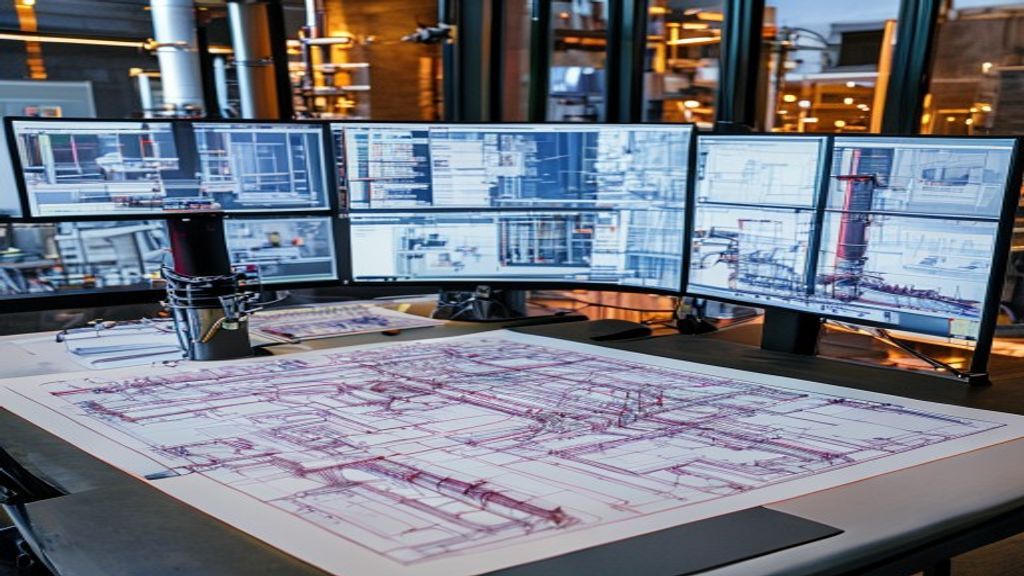
Plumbing systems are the circulatory and respiratory infrastructure of any building — delivering safe water, removing waste efficiently, and suppressing fire with the reliability that occupants rarely notice until something fails. For MEP engineers, designing an integrated plumbing strategy means orchestrating four complex subsystems — hot water distribution, cold water supply, drainage and wastewater, and fire suppression — so they perform seamlessly within a shared structural envelope, without conflicting with HVAC ductwork, electrical containment, or the architectural finish. At Vetta Engineering, our global MEP engineering teams deliver plumbing design packages that comply with BS EN, Eurocode, NFPA, IPC, and local authority standards for projects spanning Gulf high-rises, Southeast Asian medical facilities, and mixed-use developments across three continents.
This article unpacks the engineering principles behind each plumbing subsystem, the coordination challenges that make this discipline genuinely complex, and how BIM-driven workflows produce clash-free, code-compliant drawings at every stage of design. Whether you are a developer commissioning a new commercial tower, a contractor reviewing tender drawings, or an architect coordinating with your MEP consultant, this guide provides the technical depth you need to evaluate and commission a plumbing design with confidence.
Understanding the Four Pillars of Building Plumbing
Modern building plumbing is defined by four interdependent subsystems, each carrying its own hydraulic demands, regulatory requirements, and coordination touchpoints with the wider building fabric. Understanding how these pillars interact — and where they compete for the same structural penetrations, ceiling zones, and shaft space — is the first step toward a coherent design strategy.
Hot water systems distribute heated water at controlled temperatures throughout a building, serving sanitary fixtures, kitchen equipment, laundry, and industrial processes. Cold water supply delivers potable water for drinking, sanitation, and cooling at pressures suited to the building's height and occupancy profile. Drainage and wastewater systems collect soil, waste, and surface water and route it safely to municipal sewer connections or on-site treatment facilities. Fire suppression networks — sprinklers, standpipes, hose reels, and deluge systems — use dedicated high-pressure water supplies to protect life and property from fire, demanding close coordination with the structural grid and architectural ceiling designs. Together, these four subsystems form the backbone of MEP plumbing engineering, and their integrated coordination directly determines construction cost, programme risk, and long-term maintenance overhead.
For large commercial or mixed-use projects, a complete plumbing design package typically spans multiple drawing sets: schematic flow diagrams, riser diagrams, coordinated floor plan layouts, plant room detail sheets, hydraulic calculation reports, equipment schedules, and a design basis document. Vetta Engineering's MEP team delivers fully coordinated packages that sit within a larger integrated MEP engineering service covering HVAC, electrical, and fire protection alongside plumbing — a single-discipline approach that eliminates the coordination gaps that arise when subsystems are designed by separate consultants without federated model review.
Hot Water System Design — Efficiency, Safety, and Scalability
Designing a domestic hot water (DHW) system requires balancing three competing priorities: energy efficiency, Legionella bacterial control, and pressure uniformity across all served fixtures. Central plant systems — using gas or electric boilers, plate heat exchangers, or heat pumps — heat water to storage temperatures of 60–65°C and distribute it through insulated pipework with circulation temperatures above 55°C maintained continuously throughout the network. This distribution temperature is not arbitrary: at temperatures below 50°C, the bacterium Legionella pneumophila can colonise pipework, calorifiers, and storage vessels, posing a serious public health risk. Engineers therefore design systems to store water at 60°C minimum, and to ensure that every branch of the distribution circuit reaches 55°C within one hour of any cold-start condition — a requirement codified in BS 8558 and ASHRAE Guideline 12 that directly governs pipe sizing, dead-leg lengths, and recirculation pump sizing.
For mid-rise and high-rise buildings, pressure zoning is equally essential. Hydrostatic pressure rises at approximately 0.1 bar per metre of height — a 20-storey tower generates a 2 bar static pressure difference between ground and top floor outlets. Without zoning, either ground-floor fixtures operate at dangerously high pressures or upper-floor outlets suffer from inadequate flow. Pressure-reducing valve (PRV) stations and hydraulic break tanks at mid-rise plant rooms regulate pressure to the 1–3 bar range appropriate for each zone. In hospitality and healthcare projects — where shower experience and clinical hand-washing protocols are tightly specified — this pressure consistency directly affects user experience, water consumption, and regulatory compliance with patient safety standards such as HTM 04-01.
Sustainable hot water design increasingly integrates solar thermal collectors or air-source heat pump pre-heating circuits, reducing boiler load by 40–60% in sun-rich climates. Vetta Engineering designs these hybrid systems complete with buffer tank capacity calculations, frost protection circuits, and building management system (BMS) monitoring integration, delivering documented energy savings that support LEED, BREEAM, and ESTIDAMA certification submissions. The solar pre-heat circuit design must also account for stagnation risk during summer shutdown periods — a detail that is frequently overlooked and that can damage collectors and contaminate the DHW supply if not addressed in the design brief.
Cold Water Distribution — Pressure, Storage, and Quality
Cold water distribution begins at the utility meter connection and must deliver potable water reliably to every fixture in the building — from ground-floor basins to rooftop cooling tower make-up connections and fire hose reels. The two primary distribution strategies are direct mains pressure feed (used where utility supply pressure and flow rate are consistently adequate) and indirect break tank with booster pump systems (used where storage provides resilience against supply interruptions and variable-speed boosters overcome height or insufficient mains pressure). Most commercial and institutional projects use an indirect system: a ground-level or basement break tank stores 24 hours of calculated domestic demand, and variable-speed pressure sets maintain constant distribution pressure to all riser zones regardless of demand fluctuation.
Water quality management is a critical but frequently underweighted dimension of cold water design. Backflow prevention devices — double-check valves, reduced-pressure zone (RPZ) assemblies, and engineered air gaps — protect the potable supply from contamination at every cross-connection risk point. These risk points include irrigation system connections, cooling tower make-up feeds, medical equipment supply points, chemical dosing plant, and any hose union tap accessible to the public. Engineers must map every backflow risk point on the system schematic, categorise the fluid category risk under BS EN 1717 or the Water Supply (Water Fittings) Regulations, and specify the appropriate WRAS-approved backflow prevention device. Failure to do so is not only a regulatory non-compliance — it exposes the building owner to liability for contamination incidents that are entirely preventable at design stage.
Tank sizing follows a demand analysis based on occupancy type, peak demand rates from CIBSE Guide G, and strategic storage reserve requirements. For healthcare, laboratory, and food service projects, dedicated cold water storage for clinical or process supplies is typically isolated from the domestic supply, each compartment served by its own isolating valves, overflow, and water quality monitoring infrastructure. This compartmentalisation — standard practice in Vetta Engineering's hospital and research facility projects — ensures that a contamination event in one supply circuit does not propagate to clinical or food-grade water supplies.
Drainage and Wastewater Engineering
Drainage design for a modern building encompasses three distinct networks that must be kept physically and hydraulically separate throughout the building and to the point of discharge: soil and waste systems (carrying black water from WCs, urinals, and bedpan washers), grey water systems (carrying lower-contamination water from basins, sinks, and showers), and surface water drainage (collecting rainwater from roofs, terraces, and paved areas). Each network carries its own gradient requirements, trap seal depth standards, and connection protocols to the municipal combined or separate sewer, or to on-site treatment plant including package treatment units, soakaways, and detention tanks.
Gravity drainage is the engineering default, and it is non-negotiable in its geometry. All horizontal pipe runs are designed to fall at gradients of 1:40 minimum for waste pipes (32–50mm) and 1:40–1:80 for soil stacks (100mm) following BS EN 12056 and its national annexes. Where gravity gradients are impractical — in basement plant rooms, below-slab kitchen drainage, or flat-roof secondary containment drainage — submersible sump pumps, pneumatic ejectors, and macerator units provide engineered uplift solutions. Vetta's drainage drawings always include hydraulic verification of pipe sizing using the Colebrook-White equation for full-bore conditions, access chamber and rodding-point locations at every change of direction, and trap seal calculations for multi-storey stacks to confirm compliance with ventilation requirements.
Poor coordination between the drainage designer and the structural engineer is one of the most common causes of costly on-site rework in MEP construction — and it is entirely preventable when BIM clash detection is run before tender drawings are issued.
For commercial kitchens, food courts, and automotive facilities, grease interceptors and fuel-oil separators are statutory requirements under local water authority discharge consents. These prefabricated units must be hydraulically sized to the peak grease load using EN 1825 or PDI G101 methodologies, installed at the correct invert level to maintain drainage gradients downstream, and provided with a vehicle or trolley access strategy for pump-out maintenance. This requires close coordination with structural engineering teams for slab openings, sump pit formation, and access cover loading, as well as with architectural designers to ensure access routes for maintenance vehicles are preserved in the site layout. Vetta Engineering manages this cross-discipline coordination systematically through federated BIM coordination workshops at key project milestones.
Fire Suppression System Design and Coordination
Automatic fire suppression systems — principally wet-pipe sprinkler systems for occupied buildings in standard conditions — are among the most comprehensively regulated building services in the world, and for good reason: a well-designed sprinkler system reduces fire fatalities in commercial buildings by over 85% compared to buildings with no suppression. In most jurisdictions, commercial, hospitality, healthcare, and residential buildings above defined floor area or height thresholds are required to install automatic sprinklers under NFPA 13, BS EN 12845, or local Civil Defence authority requirements. The design process begins with a hazard classification — Light Hazard, Ordinary Hazard Group 1 or 2, Extra Hazard Group 1 or 2 — which determines sprinkler head spacing, design density in L/min/m², and the required residual pressure at the most remote hydraulically calculated design area.
Fire suppression systems require a dedicated water supply that is entirely independent of the domestic water systems. Supply options include a direct municipal connection where flow and pressure test data confirms adequacy, or more commonly a dedicated fire break tank and listed fire pump set sized to maintain design flow rate at design pressure for a minimum 30 or 60-minute demand period, as required by the hazard class and AHJ. The fire pump room location, break tank dimensions and access provisions, jockey pump configuration, and alarm valve set location all require coordination with structural engineers for housekeeping pad design, slab openings, and penetration sleeves, as well as with the architect for room sizing, door widths compliant with equipment entry requirements, and acoustic treatment. Vetta Engineering's fire suppression packages include full hydraulic network calculations using pipe friction loss analysis, pump duty and standby sizing, and coordination drawings for sprinkler, hose reel, and dry or wet riser systems.
Sprinkler head placement demands meticulous coordination with the architectural ceiling design — a coordination point where late changes cause the most disruption. Concealed pendent heads must be set to the correct depth below finished ceiling level with the correct escutcheon plate colour and material; standard pendent heads must clear structural beams, HVAC ductwork, and lighting fixtures by the minimum clearances specified in BS EN 12845 and NFPA 13; sidewall heads require unobstructed sight lines across full room widths. For feature ceilings, coffered soffits, and high-specification interior environments, every enclosed ceiling void must be individually assessed for suppression coverage. Vetta Engineering's MEP practice and interior coordination service work together on these projects to deliver sprinkler layouts that are simultaneously code-compliant, practically installable, and aesthetically integrated with the design intent.
BIM Coordination and Clash Detection for Plumbing Systems
Building Information Modelling has transformed plumbing design from a set of 2D drawings into a spatially accurate digital model that can be interrogated, hydraulically analysed, prefabrication-optimised, and handed over to facilities managers with embedded asset data. At Vetta Engineering, all plumbing systems are modelled in Revit MEP at LOD 300–400 depending on project stage, and federated with architectural and structural models in Navisworks for systematic clash detection and resolution.
A medium-sized commercial project typically generates 200–400 clashes in the first federated coordination session. The most common categories are drainage routes conflicting with structural downstand beams, fire suppression mains competing with primary HVAC ductwork runs, and hot water risers sharing congested shaft spaces with electrical containment. Resolving these clashes in the model before construction documents are issued costs a fraction of what on-site rework demands — a single drainage re-route through a post-tensioned slab can cost USD 20,000–50,000 in rework and programme delay on a Gulf commercial project, a figure that would have been prevented by three hours of federated clash review at design stage.
- Revit MEP plumbing model at LOD 300–400 for all four subsystems
- Federated clash detection against structural and architectural models in Navisworks
- Hydraulic calculations linked to model geometry and equipment data
- Coordinated slab penetration schedules and pipe sleeve specifications
- Equipment room layouts with maintenance access clearance verification
- Riser diagrams coordinated with floor plan layouts and shaft sections
- Prefabrication-ready pipe spool drawings for contractor off-site manufacture
- ISO 19650-aligned BIM data handover package for FM and O&M use
International Standards and Regulatory Compliance
Plumbing design is governed by a layered hierarchy of international standards, national regulations, and local authority requirements that vary significantly between jurisdictions. Vetta Engineering's engineers are proficient in the major frameworks applied across our project portfolio, and we prepare a design basis document for every project that maps the applicable standards hierarchy, identifies gaps or conflicts, and confirms the more conservative design approach where standards diverge:
- BS EN 806 — Installations inside buildings conveying water for human consumption
- BS EN 12056 — Gravity drainage systems inside buildings, parts 1–5
- BS EN 12845 — Fixed firefighting systems, automatic sprinkler systems
- NFPA 13 / NFPA 14 — Sprinkler and standpipe installation standard (Gulf, USA, international projects)
- IPC (International Plumbing Code) — Widely adopted in Gulf states, Southeast Asia, and Africa
- ASHRAE Guideline 12 / ASHRAE 188 — Legionellosis risk management in building water systems
- WRAS Water Fittings Regulations — Backflow prevention and approved materials (UK and Commonwealth)
- HTM 04-01 — Safe water in healthcare premises (hospital and clinical facility projects)
- LEED v4 / BREEAM / ESTIDAMA Pearl — Water efficiency credits, baseline and design case calculations
For projects spanning multiple jurisdictions — common for international developers active across the Gulf, Southeast Asia, and Europe — Vetta Engineering's design basis document provides the client and authority having jurisdiction (AHJ) with full transparency on the standard applied to each system element and the rationale where engineering judgement has resolved a conflict between codes. This documentation discipline prevents the costly redesign instructions that arise when regulatory non-compliance is identified at the detailed design review stage rather than at design basis approval.
Sustainability integration is increasingly inseparable from plumbing standards compliance. LEED v4 Water Efficiency credits require metered baseline and design case water consumption calculations, low-flow fixture specifications aligned with WaterSense or equivalent certification, and — in higher-scoring submissions — rainwater harvesting or greywater reuse strategy documentation. Vetta Engineering supports complete LEED, BREEAM, and ESTIDAMA plumbing documentation including fixture schedule preparation, sub-metering strategy, and the performance narrative required by the certifying assessor. Our on-site engineering service extends this compliance support through construction inspection, commissioning witnessing, and handover documentation to ensure the installed system performs as designed.
Agree your pipe material specification with the client and contractor before modelling begins — not after. Copper, CPVC, press-fit carbon steel, HDPE, and stainless steel all have different thermal expansion coefficients, support spacing tables, and jointing methods. Switching materials mid-design invalidates your hanger schedule, slab penetration sizes, and equipment connection details, triggering a cascade of drawing revisions. A single materials schedule agreed at Stage 2 design saves weeks of rework at Stage 4.
Coordinating Plumbing Across MEP and Building Disciplines
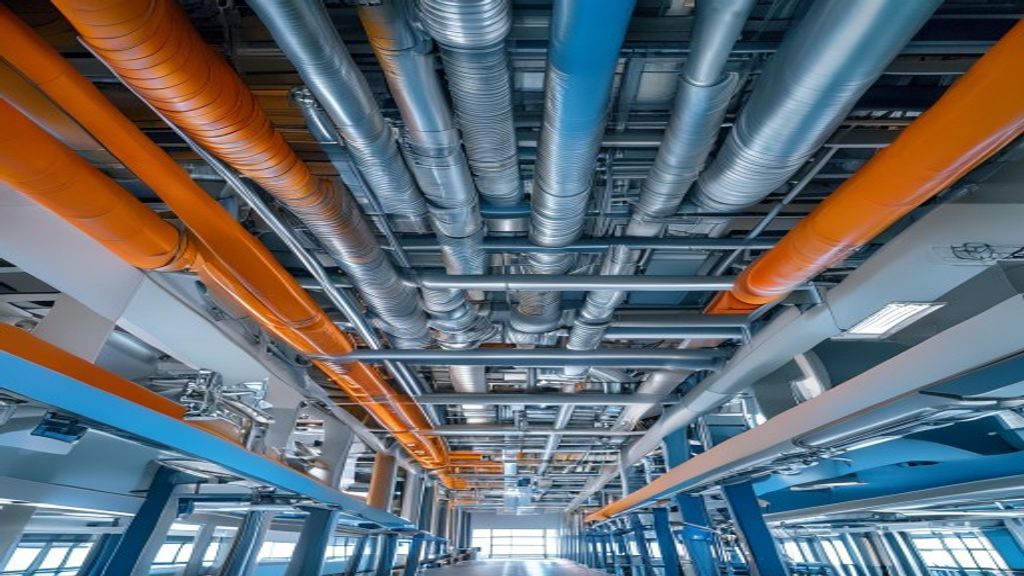
Plumbing cannot be designed in isolation from the building it serves. Every subsystem — hot water, cold water, drainage, fire suppression — competes for the same ceiling voids, vertical shafts, and structural penetrations as HVAC ductwork, electrical cable management, communications infrastructure, and low-voltage systems. Effective MEP coordination requires a structured spatial allocation process agreed with the architect at schematic design stage, a clear service priority hierarchy enforced through the BIM clash process, and a programme that gives each discipline adequate time for coordinated review before construction documents are issued.
The governing principle of MEP spatial coordination is that gravity systems take precedence. A drainage pipe that loses its gradient because it was re-routed around a duct will back up and overflow — a building performance failure with immediate health and liability consequences. HVAC ductwork and electrical containment, which can be re-routed with far greater geometric flexibility, must yield to drainage gradients in congested zones. Vetta Engineering establishes this hierarchy explicitly at the first coordination workshop on every project, reducing the number of drainage-related clashes that reach the formal clash detection stage and accelerating the resolution programme.
Fire suppression coordination with the architectural team deserves particular attention on high-specification projects. Architects frequently specify feature ceilings, acoustic rafts, bulkheads, and coffered soffits that create enclosed ceiling voids where sprinkler coverage is technically required but architecturally challenging to provide. Early engagement between Vetta's MEP engineers and the architectural design team — ideally at Stage 2 concept design — ensures that void treatment is incorporated into the sprinkler design, that concealed head selection is confirmed at a stage when the ceiling subcontractor can still accommodate the specified head body depth and escutcheon plate, and that the fire AHJ approval drawing reflects the final ceiling as-built configuration. For projects where interior design and decoration is a primary client priority, this early coordination prevents the recurring conflict between compliant sprinkler coverage and premium interior aesthetics.
Key Takeaway
Effective MEP plumbing design is not four separate packages delivered by four specialist subcontractors — it is a single integrated engineering strategy that coordinates hot water, cold water, drainage, and fire suppression within the constraints of structural geometry, architectural intent, and international regulatory standards. The buildings that perform reliably for their full 50-year service life, with minimal maintenance intervention and no compliance surprises, are the ones where this integration was resolved at design stage through rigorous BIM coordination, documented hydraulic calculations, and a clear standards hierarchy. Vetta Engineering delivers that discipline on every project, for any building type, in any global jurisdiction. Contact Vetta to discuss your next MEP plumbing project.
Frequently Asked Questions
A complete MEP plumbing design package includes schematic flow diagrams for each subsystem (hot water, cold water, drainage, fire suppression), coordinated floor plan layout drawings at each level, riser diagrams showing vertical distribution, plant room arrangement drawings, hydraulic calculation reports confirming pipe sizing and pressure performance, equipment schedules for pumps, water heaters, and fire pump sets, a slab penetration and pipe sleeve schedule coordinated with the structural engineer, and a design basis document stating the applicable standards. For BIM projects, the package also includes the Revit MEP model at the agreed LOD and a clash detection report confirming federated coordination with architectural and structural models.
MEP plumbing design fees vary with project scale, complexity, and geographic location, but as a general guide they fall in the range of 0.5–1.5% of the construction cost of the plumbing installation for a complete design service from concept to construction issue. For a medium-sized commercial building with a plumbing installation value of USD 2–5 million, design fees typically range from USD 20,000–75,000 depending on the number of subsystems, the BIM LOD required, and the number of AHJ approval submissions. Healthcare and laboratory projects command higher fees due to the additional complexity of clinical water systems and risk documentation. Vetta Engineering provides fixed-fee or percentage-based proposals depending on client preference — contact us with your project scope for a tailored fee proposal.
A typical commercial project plumbing design programme runs as follows: Stage 1 concept design (system selection, design basis document) takes 2–4 weeks; Stage 2 schematic design (riser diagrams, preliminary hydraulic calculations) takes 3–6 weeks; Stage 3 developed design (coordinated layout drawings, equipment sizing) takes 4–8 weeks; Stage 4 construction documents (fully coordinated, annotated drawings, specifications) takes 4–8 weeks. Total elapsed time from appointment to construction-issue drawings is therefore typically 3–6 months for a medium commercial project, depending on the speed of client and authority approvals at each stage gate. BIM coordination and AHJ fire system approval are the two activities most likely to extend the programme, and early engagement with the authority is strongly recommended.
Cold water systems supply unheated potable water from the utility connection or stored break tank to all fixtures, and their primary design parameters are flow rate, pressure consistency, storage capacity, and backflow prevention. Hot water systems heat that cold water supply — typically using boilers, heat exchangers, or heat pumps — and distribute it at elevated temperatures through an insulated recirculating network to serve sanitary and process demands. The critical additional design considerations for hot water systems are Legionella bacterial risk management (requiring storage at 60°C minimum and distribution above 55°C), thermal expansion accommodation in pipework, heat loss calculations for insulation specification, and energy metering for sustainability compliance. Both systems must be coordinated to avoid cross-connection, and their combined demand profile drives the break tank and booster pump sizing.
The two dominant international standards for automatic sprinkler design are NFPA 13 (National Fire Protection Association, USA) and BS EN 12845 (European Standard, harmonised across EU and Commonwealth countries). NFPA 13 is widely adopted across the Gulf Cooperation Council states, much of Southeast Asia, and Africa, while BS EN 12845 applies in the UK, Europe, and many Commonwealth jurisdictions. Both standards cover hazard classification, sprinkler spacing limits, design density, hydraulic calculation method, water supply requirements, and installation rules. In addition to these core standards, most jurisdictions require compliance with local Civil Defence or fire authority technical requirements that may supplement or supersede the international standard — in the UAE, for example, Civil Defence Technical Guidelines take precedence. Vetta Engineering's fire suppression designs include a standards compliance matrix confirming adherence to all applicable requirements.
BIM enables three categories of quality improvement that 2D CAD workflows cannot replicate. First, spatial clash detection: a federated BIM model combining architectural, structural, and MEP disciplines identifies physical conflicts between drainage pipes, structural beams, HVAC ductwork, and electrical cable trays before any drawing is issued for construction — Vetta Engineering typically resolves 200–400 clashes per medium commercial project in the model, each of which would otherwise have generated a costly site instruction. Second, hydraulic model integration: pipe sizing and pressure calculations can be linked to the modelled geometry, ensuring that as the design evolves the calculations remain synchronised with the actual routing. Third, data handover: the completed BIM model carries embedded equipment data, maintenance zone information, and asset identifiers that support facilities management after handover, reducing the operational cost of the building over its service life.
Legionella pneumophila is a waterborne bacterium that proliferates in building water systems held at temperatures between 20°C and 45°C and can cause Legionnaires' disease — a potentially fatal form of pneumonia — when contaminated water aerosols are inhaled. In hot water systems, the primary design controls are: storing water at a minimum of 60°C to pasteurise the stored volume; distributing hot water at a minimum of 55°C throughout the entire secondary circulation circuit so no section of pipework cools into the danger zone; minimising dead legs (unused branches) to less than 2 litres of pipework volume; specifying thermostatic mixing valves (TMVs) at point of use to deliver safe outlet temperatures below 44°C for clinical and elderly-occupancy settings; and using materials that do not support biofilm formation. Vetta Engineering prepares a Legionella risk assessment as part of every DHW design brief, with dead-leg elimination reviewed in the BIM model.
Yes — Vetta Engineering regularly delivers complete MEP plumbing design packages remotely for projects in the Gulf, Southeast Asia, Africa, and Europe. Our remote delivery workflow includes video-conference design workshops with clients and local authorities, BIM model sharing via cloud collaboration platforms, digital submission of fire system approval packages, and coordination of construction-stage queries through our project management portal. For projects where local authority submissions require a locally registered engineer's stamp, Vetta can coordinate with an in-country associate to provide the statutory sign-off while Vetta retains full design authorship. Our remote workflow is fully documented in our ISO 9001-aligned quality management system and has been successfully applied on projects ranging from 10,000 m² office buildings to 150-bed hospital facilities.
Soil drainage carries foul water from WCs, urinals, and bedpan washers — water that contains human waste and must be treated as a contaminated stream throughout its routing and discharge. Waste drainage carries grey water from wash basins, sinks, baths, showers, and dishwashers — lower in pathogen load but still requiring connection to the foul sewer or treatment system. Surface water drainage collects rainwater from roofs, terraces, car parks, and paved areas — this is clean water that can typically be discharged to a watercourse, soakaway, or sustainable urban drainage (SuDS) system without treatment, and must not be connected to the foul sewer in separate system jurisdictions. Combining these streams creates regulatory non-compliance and can overload treatment plants — all three networks must be kept separate from meter point to discharge, a requirement that drives significant coordination effort with the structural and civil engineering disciplines.
Fire pump sizing follows a hydraulic calculation process that works from the most hydraulically remote design area in the sprinkler network back to the pump suction. The designer first establishes the design density (L/min/m²) for the hazard class, applies it to the design area (typically 260 m² for Ordinary Hazard Group 2 under BS EN 12845), calculates the total flow demand including hose allowances, then calculates the pressure required at the pump outlet to deliver design pressure at the most remote head after accounting for all friction losses and static head. The pump duty point (flow and pressure) is then plotted against available pump curves, and a pump model is selected whose curve passes through the duty point with appropriate margin. A standby pump of identical duty is provided alongside an auto-start jockey pump to maintain system pressure and detect leakage. Vetta Engineering's fire pump sizing reports include full calculation sheets, manufacturer pump curve overlay, and pump room arrangement drawings.
Pressure zoning divides a tall building's water distribution into vertical bands, each served by a dedicated pressure management arrangement, so that no fixture in the building operates at pressures below 1 bar (insufficient for adequate flow) or above 3–4 bar (which causes splash noise, water hammer, accelerated valve wear, and increased consumption). Without pressure zoning, hydrostatic pressure at the base of a 25-storey building would exceed 25 bar — far beyond the design pressure of standard plumbing fittings and fixtures, and causing rapid component failure. Each pressure zone is typically 6–10 storeys in height, separated by a dedicated plant room containing pressure-reducing valve stations or a hydraulic break tank with booster pumps. Zone boundary strategy must be established early in the project, as it drives the location of plant rooms, the structural provisions for break tanks, and the vertical shaft space requirements — decisions that cannot be easily changed once the structural scheme is fixed.
LEED v4 Water Efficiency credits reward a range of plumbing design strategies. The prerequisite requires a minimum 20% reduction against the LEED baseline through low-flow fixture selection — WaterSense-certified WCs, urinals, taps, and showers. Additional credits reward 30–50% reduction with high-efficiency fittings and process equipment. Water metering for domestic, irrigation, and process uses earns a dedicated credit. Cooling tower water use efficiency is separately credited. For maximum LEED WE performance, Vetta Engineering designs greywater recycling systems (reusing basin and shower water for WC flushing), rainwater harvesting systems (reducing irrigation mains demand), and dedicated sub-metering infrastructure across all major end uses. Each strategy requires hydraulic sizing, water quality treatment specification, and a monitoring protocol — all documented in the credit submission narrative that Vetta prepares for the LEED assessor.
Plumbing coordination with the structural frame is one of the most critical interdisciplinary interfaces in building design. Drainage pipes must pass through concrete slabs at precisely positioned cast-in sleeves or core-drilled openings — positions that cannot be easily changed after the slab is poured. Hot and cold water risers and fire main branches require structural penetrations sized for the pipe plus insulation plus fire stopping material. Post-tensioned slabs, which are common in commercial construction, have strict no-core-drill zones around the stressed tendons that dramatically constrain the pipe routing options. Vetta Engineering manages this coordination by issuing a slab penetration schedule — agreed between MEP and structural engineers — at least six weeks before each slab pour, giving the structural engineer time to review tendon clearances and the contractor time to position the cast-in sleeves accurately. This schedule is generated directly from the federated BIM model to guarantee dimensional accuracy.
A backflow prevention device is a valve assembly that prevents water from flowing in reverse from a potentially contaminated secondary system back into the clean potable supply, which can occur when supply pressure drops (back-siphonage) or when downstream pressure exceeds supply pressure (back-pressure). BS EN 1717 and the Water Supply (Water Fittings) Regulations classify fluid contamination risk on a scale from Category 1 (drinking water quality) to Category 5 (serious health hazard), and require progressively more robust backflow prevention devices for higher-risk connections. An air gap (AA) is required at Category 5 risk points such as irrigation connections and industrial process feeds. A reduced-pressure zone (RPZ) valve is required at Category 4 risk points including cooling towers. A double-check valve is suitable for Category 3 risks. Vetta Engineering maps all cross-connection risk points on the cold water schematic and specifies the appropriate WRAS-approved device as part of every plumbing design package.
Vetta Engineering structures plumbing design across four RIBA-aligned stages. Stage 1 (Concept) takes 2–4 weeks and produces the design basis document, system strategy report, and preliminary equipment list for client sign-off. Stage 2 (Scheme Design) takes 3–5 weeks and produces schematic diagrams, riser concepts, plant room area requirements, and preliminary hydraulic calculations to support planning applications and structural scheme input. Stage 3 (Developed Design) takes 4–8 weeks and produces coordinated floor plan layouts, equipment sizing calculations, and the fire suppression design for AHJ pre-application review. Stage 4 (Construction Documents) takes 4–8 weeks and produces fully annotated, BIM-coordinated construction drawings, specifications, and tender-ready documentation. The most variable timeline factor is AHJ fire suppression approval, which can take 4–12 weeks in Gulf jurisdictions — Vetta Engineering submits early to parallel-path this approval with the remainder of Stage 4.
Yes — Vetta Engineering offers a full spectrum of construction-stage and commissioning services to complement the design package. Our on-site engineering service includes periodic site inspection visits to review installed plumbing against approved drawings, review of contractor shop drawings and material submittals for specification compliance, review and approval of spool drawings for prefabricated pipe assemblies, witnessing of hydraulic pressure testing for all pipework systems, Legionella risk assessment of the installed hot and cold water systems prior to first fill, commissioning witnessing for fire pump sets and booster pump systems, and preparation of the O&M manuals and as-built record drawings for the building owner. This end-to-end service — from concept design through commissioning sign-off — is particularly valued by international clients who require a single engineering partner accountable for the full technical lifecycle of their MEP plumbing systems.